Recent Posts

Showing posts with label Facebook. Show all posts

Thursday, June 14, 2012

Google+ Can Still Beat Facebook!!

Why Google+ Can Still Beat FacebookNow that Facebook has gone public and is nearing an astounding 1 billion members, it’s a good time to ask whether Facebook’s main rival, Google, can compete in the social networking game.
Google said in April that 170 million users had “upgraded to Google+,” but the company has been coy when it comes to specifying how many of those people actually use the social network on a regular basis. Some observers have suggested that it's mainly Google employees and hard-core Google loyalists who actively use the service today.
I still think Google+ can win out against Facebook in the end. But to do that, Google must learn how to play to its own strengths.

Larry PageA lot rides on whether Google can pull that off. For ad targeting, Google can collect the data it needs from the subjects of people’s Web searches and the content of email, but that data isn’t nearly as personal and valuable as the stuff people willingly provide to Facebook every day. Social network data is far more individual and preference-oriented than other kinds of targeting data, and the long-term competitiveness of Google’s advertising business (96.5 percent of its revenue) may depend on Google's ability to get that data.
Larry PageIf anybody has a battle plan for Google+, it’s Larry Page. The Google cofounder and CEO has given some good reasons why Google+ will become a contender, but his reasons seem highly theoretical at this point.

‘Circles’ More Closely Resembles Real Life
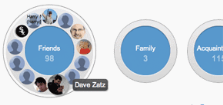
Why Google+ Can Still Beat FacebookPage says that the “Circles” structure in Google+ offers a great way to organize your friendships. He’s right: The Circles design is immediately intuitive; it’s easily understandable, and it works because it replicates the way we manage relationships in real life.
Mark Zuckerberg stresses that you can make “groups” in Facebook to organize friends in the same way. But that functionality was not part of Facebook's original design; the service bolted it on later. And that’s why grouping your friends in Facebook is a far clunkier process than it is in Google+. The Circles concept is central to Google+--in fact, Google+ was originally called “Google Circles.”

Integration With Other Products

The biggest edge that Google+ might have over Facebook hasn’t been exploited nearly as much as it could be. Google's original plan was to build Google+ social networking features and tools into almost all of its existing online services, from search to Docs to video (YouTube).

Why Google+ Can Still Beat FacebookGoogle+ is already integrated into the navigation bar at the top right of almost all Google products; this arrangement lets you monitor all Google+ events (updates, messages, and the like) as well as share content with friends without ever leaving the Google service you happen to be using. And the Google+ client for Android makes it really easy to upload, automatically, any photos you shoot on your phone to a private album on the Google+ servers.
Beyond those features, however, not much has happened since the Google+ site launched last summer. In July 2011, Google was asking users how it could integrate aspects of Google+ into Gmail, and vice versa. What happened with that? I’ve seen no major integration moves announced between the two products. Can I easily launch a Hangout session without leaving the Gmail app? No. Can I receive Gmail inbox notifications in Google+? Not yet.
Millions of people use Google's assorted free services (Gmail, Docs, search, and so on). For Google+ to flourish, Google must bind those services and Google+ functions together. You need to be able to break into an impromptu Hangouts video chat session involving the people you’re collaborating with to build a Google Docs spreadsheet. Your searches, where appropriate, should be much more driven by your social networking preferences and those of your friends.
To compete with Facebook, Google must integrate Google+ with its other killer services so tightly that leaving the Google property you're in and going to Facebook becomes a hassle.
I think Google will eventually execute on this vision. And when it does, it will start to win users away from Facebook. This is a zero-sum game: Most people simply don’t have room in their lives for two separate social networks, a factor that's helping Facebook tremendously right now.

Approach to Privacy

People are becoming increasingly aware that large companies like Google and Facebook are collecting the data they enter online, and using it to target ads or selling it to third parties. The constant media coverage of Facebook’s notoriously poor stewardship of personal data has done a lot to draw consumer attention to the largely hidden ecosystem of companies that collect, buy, sell, and trade in personal data.
For instance, Facebook makes your name, gender, profile picture, networks, friends, “Likes,” wall posts, photos, and profile details public by default, which makes those facts about you searchable.
Why Google+ Can Still Beat FacebookPreviously, you used to be able to set the public-by-default profile picture to private. You no longer can--nor can you change the setting for your name, your cover photos, your networks, your gender, and your Facebook username and user ID.
Facebook has steadily designated more user data as public information because its advertising partners can use the public stuff to target ads on the Facebook site. This data will very likely serve to target Facebook ads on other sites in the near future. And if you don’t want to make these data points public, Facebook says (in effect) that you can’t use Facebook.
The fact is, Facebook is more dependent on personal social networking data than Google+ is. Google is highly reliant on personal data too, but does not need to collect everything in a social networking setting. As people become more aware of the uses of their personal data, they may see the Google+ privacy approach as a reason to switch.

Data Portability
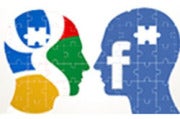
Why Google+ Can Still Beat FacebookIt’s very hard to delete your Facebook data if you decide to quit the service. You can delete your profile, but Facebook makes no promises that it will delete the personal data about you that it already stores on its servers.
Google makes it relatively easy to permanently delete the data you’ve banked at Google+, and walk away. You accomplish this through a Google+ tool called Google Takeout; with just a few clicks, you can download data from your Picasa Web Albums, Google profile, Google+ stream, Buzz, and contacts.

The Battle for Personal Data

Of course only time will tell whether Google can assume the social networking throne. The idea of Google+ having anywhere near as many users as Facebook seems a little far-fetched right now. But I still believe that Facebook is not immune to the shifting tastes of social network users. MySpace seemed unstoppable for a few minutes, but slid downhill quickly after Facebook became the cool place to network.
Google has to leverage its obvious advantages to catch up with Facebook. It must put significant energy into expanding Google+ functionality into all of its most popular services. It must promote killer features like Hangouts to new audiences (such as small businesses). It may need to evangelize about how it is more respectful of personal data, and more trustworthy with that data, than Facebook.
Google might also have to invest some of its great wealth to promote Google+. I still haven’t seen a Google+ commercial on TV, nor have I seen Google offer any rewards for people who cancel Facebook to come over to Google+.
Regardless, Google’s need for personal identity and preference information may soon compel it to take dramatic steps to compete with Facebook.
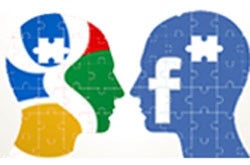
Sunday, May 20, 2012

Who Will Win: Facebook vs. Google !!

Facebook is now officially a public company, scads of new millionaires are on a Silicon Valley spending spree, and media outlets near and far have yet to pipe down about the IPO, likely one of the most anticipated in history.
But is the long-term viability and success of Facebook a slam dunk?  You’d think so, considering 900 million people on the planet use the social network now valued at nearly $105 billion.
Not everybody thinks so.
The Telegraph’s Michael Deacon says he was once addicted to Facebook but now thinks its users hardly have anything to say on it compared with Twitter, which he calls “magnetic” because it “incessantly breaks and circulates news.” He even goes as far to say Facebook in a few years will “be as sad and lonely a ghost town as MySpace.
I wouldn’t go quite that far, but he makes some valid points. Many people have grown tired of Facebook and do prefer alternate social networks, such as Google+.
Google certainly is serious about social and it’s no secret that Facebook wants more of Google’s advertising, but who will come out on top?

Social Networking Rivalry

Yes, Facebook has a huge head start in social compared to Google, but Google+ users tend to be fiercely loyal because, honestly, it’s a great -- albeit very different -- product .
Unlike Facebook, Google+ is where you’re more likely to engage with strangers -- many of whom reach out from countries around the world.
Just this morning I had a Google+ chat with a blogger from India who, even though he uses both Facebook and Google+, was only able to reach me through the latter where in seconds we were having a conversation about the merits of both social networks. Such contact wouldn’t have happened on Facebook because my Facebook friends are all in the U.S. and most of them know me personally, which means I keep my chat disabled because I don’t want people I haven’t seen in 20 years messaging me every time I check my stream.
Eric Norstrom, a molecular and cellular neurobiologist, is another person with whom I’ve connected through Google+.
Here’s how he aptly puts it:
“G+ is not FB, Twitter, or anything else. It's G+. It's great for content aggregation and collaboration in addition to the services provided by the other major social apps. It's not people bleating on a street corner. It's more like, you walk down a street and don't see anyone, but then you go into a building and you find that there's a party going on. Not only that, it's a good party with interesting people talking about things you care about and leaving out things you don't. Less noise, more signal.”
He’s right about Google+ being a more lively place to hang out. You’re not likely to see inane posts -- most contain photos, videos or links to other interesting content. This morning someone in one of my circles shared a post by Google Maps touting a NASA map that shows where the May 20 eclipse can be seen. (See also "Google+ vs. Facebook: See How They Compare.")

Google’s Many Products are an Advantage

While there certainly were some privacy concerns when Google said it would share user data across its products, it can’t be denied that the company has created a slick and seamless experience for users.  
On my Android phone I use Places, Maps and Navigation, YouTube, Voice, Talk, Calendar, Drive, Goggles, and Play Music, and many of these apps sync to the cloud for integration to the desktop.
In essence, Google has a very large window into what I’m doing, where I’m going, what I’m watching, and who I’m talking to. And this window stays open for much of every day I’m online or using my phone.
While Facebook also garners data from me when I’m on its network, I’m not there very often, relatively speaking.

Battle Over Advertising

Facebook has many fans, is growing on a billion users, and now has a big pile of money with which to continue to innovate. For instance, the company recently said that at some point it could launch an advertising network to display ads outside of its platform. That would be huge and put the company in a much better place to compete with Google.
CNET’s Rafe Needleman wrote a great piece summing up the many ways Facebook and Google’s trajectories cross, particularly when it comes to advertising. And as he points out, both companies have their strengths.
“The infusion of public IPO money will embolden Facebook to take on Google directly in areas where it's clearly weaker -- primarily advertising, but also search and mobile. Google will defend its turf while simultaneously attacking Facebook in social (and hopefully in identity services),” he writes.
That last part -- identity services that let you sign into a Website or account using your Facebook credentials -- is definitely something Facebook has a good hold on, and as Needleman points out, it’s something Google needs to get better at marketing.
But Google is kicking it with mobile. CEO Larry Page, in a letter to investors last month said the company is “seeing a hugely positive revenue impact from mobile advertising, which grew to a run rate of over $2.5 billion by the third quarter of 2011 -- two and a half times more than at the same point in 2010.”
Can Facebook figure out how to get some of that pie? It had better -- its users are now using the social network more from their mobile devices than from their desktops.

Tuesday, May 15, 2012

Facebook Best Features: Now Quit Facebook!!

How to Quit Facebook Without Losing the Best Facebook FeaturesAlmost everyone uses Facebook, but almost everyone agrees that the social network has quite a few problems. Chances are, most Facebook users have encountered some feature or flaw--from overarching privacy concerns to assorted interface annoyances--that made them reconsider their membership in the social network. Nevertheless, Facebook users tend to stick around because they believe that the benefits outweigh the costs--and because they don't know how to leave the service without losing a few valuable features, such as games or public photo albums.
Luckily, you can export or replicate many of Facebook's most useful features with ease, so you can quit Facebook without losing what you love about it. If Facebook is your all-in-one stop for socializing online, you're probably better off staying with the service and hoping that the company fixes a few issues in the next redesign. But if you're hanging on for the sake of just one or two features even though you'd rather quit, take a look at the following tips and tricks. With some help, you'll be able to enjoy the best parts of the most popular social network without all of that Facebook anxiety.

Export Info From Facebook

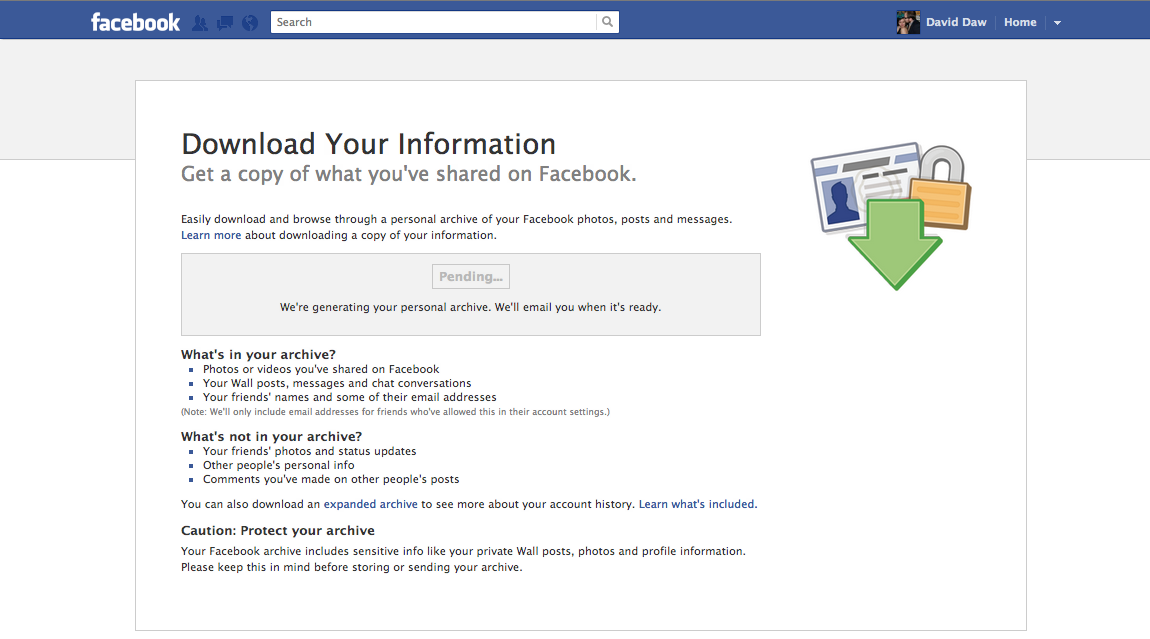
If you quit Facebook, all your personal data should be deleted from the Facebook servers. Eventually. But if you want to leave Facebook without losing any of your data, you can download a copy of your Facebook information fairly easily. Simply navigate to your Facebook account settings, and you should should see a Download a copy of your Facebook data link at the bottom of the page. Click the link, and confirm that you'd like to have an archive created for you; Facebook will send a download link to your email address in a few hours when your archive is prepared.
How to Quit Facebook Without Losing the Best Facebook Features
In the General Account Settings menu, you can find an option to download a copy of all the data you've shared on Facebook.
Several mobile apps (such as the free SmartSync for iOS or AddressBook for Android) will scrape your Facebook friends info and automatically add it to your smartphone contacts database, as well.
Even so, Facebook offers far more information on you and your friends than you'll ever really need, and it's better to be selective about what data you take when you leave. Think of it as an opportunity to do some spring cleaning. Unless you really want your whole Facebook friends list clogging up your phone, do a quick manual review of your friend info and copy any pertinent information before shutting your account down.
Another trick lets you copy one of Facebook's most used and least appreciated features: the birthday reminder. Navigate to your Facebook Events page and click the magnifying glass icon. Select Birthdays, click the magnifying glass again, and choose Export Birthdays to quickly and easily grab your contacts' birthday info in formats compatible with every major scheduling program. This way, you'll remember to drop your best friend from college a birthday note even after you leave Facebook.

Organize Events

I've kept Facebook around for years because, despite its many faults, it has been the single best way to schedule parties and other events with my friends. That's starting to change, however. In the past, Facebook was a superior event-planning platform because users were sure to check it often enough to catch event invites; with the rise of event spamming, though, more and more of my Facebook-using pals now ignore all Facebook event invitations. This problem forces me to confirm through other channels, removing Facebook's one real advantage over other event-planning tools.
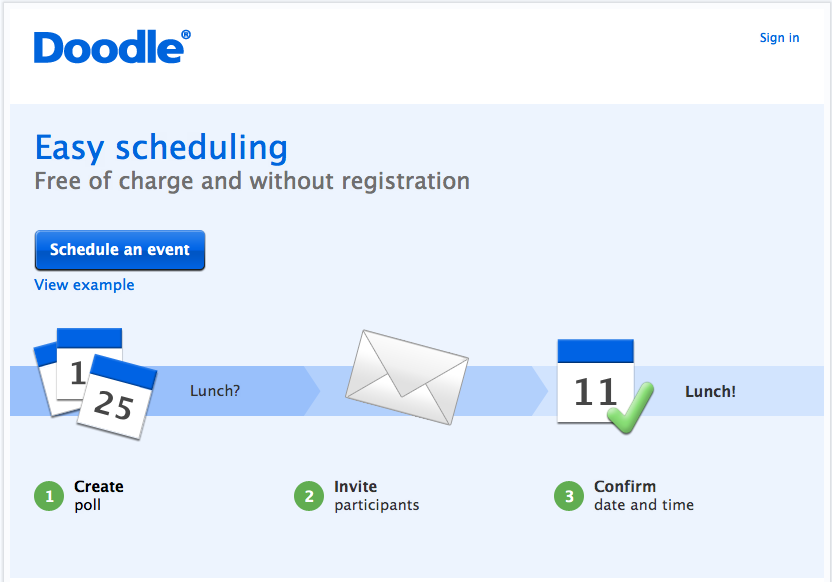
If you want to invite people to your event without using Facebook, you can find a lot of options, such as Evite and Eventbrite, that are free and work well. I'm a fan of Doodle, which uses a simple, clean interface and is incredibly quick to set up. Just enter an event name and time, and Doodle will provide you with a link that you can send to your friends by email; they can then RSVP with one click.
How to Quit Facebook Without Losing the Best Facebook Features 
The free and easy-to-use Doodle event-planning service is as good as (and in some ways better than) Facebook's Events app.
Doodle also offers a killer feature that Facebook doesn't: Doodle events allow participants to choose a start time from a list of host-provided options. This feature can save a lot of time, and it eliminates irritating auto-updates like the kind you get when you're trying to coordinate event timing via Facebook.

Move Your Photos off Facebook

If you download your data from Facebook as described earlier, that archive will include any photos or videos you shared on Facebook. To start sharing them again, as well as to have the same quick online access without Facebook, you can transfer those photos to Google's photo-sharing service Picasa.
Unfortunately, Facebook makes it all but impossible to export photo and video files directly to other hosting services. The easiest way to migrate photos over to Picasa is to download Move Your Photos, a Chrome extension that, once installed, will show you thumbnails of all your Facebook photos so that you can easily sort through them and transfer the ones you want to keep over to Google's photo-sharing service. If you want to transfer your Facebook photos to a social-network-agnostic photo-sharing site such as Flickr, you must manually download the photos to your hard drive and upload them directly to Flickr.
How to Quit Facebook Without Losing the Best Facebook Features 
If you use Chrome, the Move Your Photos extension offers an easy way to migrate your Facebook photos over to Picasa selectively.
Of course, you can't replicate every Facebook feature without an account. (Sadly, a life without Facebook seems to mean a life without FarmVille; if you're a social games addict, check out a few social games on Google+.) On the bright side, moving your personal info, photos, and event calendar to a better, safer service should make quitting Facebook much simpler. Good luck!


Monday, May 14, 2012

Facebook's Future: Mobile Advertising!!

Facebook CEO Mark ZuckerbergFacebook users are increasingly accessing the online social network via their mobile devices, a trend the company expects to capitalize on through advertising as it prepares for its IPO.
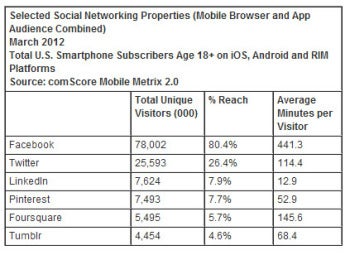
In March, the average Facebook mobile user engaged with the social network for more than 7 hours, according to comScore. That's a lot of head-down time to which Facebook has to respond.
Facebook chief Mark Zuckerberg, who was on the road last week talking with investors about the company's growth strategy, said his top priorities this year are to transform Facebook's mobile and advertising experiences and further integrate online apps into the platform, reports Reuters.
With more people than ever using smartphones and accessing sites like Facebook on them, the big question is how the company can make more money with advertising on mobile. You can bet Facebook will figure it out considering advertising is the reason Zuckerberg and other insiders are about to become extremely rich.
For users, more advertising on mobile is somewhat of a drag, but there's utility involved as well. A lot of what we're doing on and with our mobile devices is being tracked by scads of application developers and device makers who aim to improve their products and marketing activities because they know what we like, where we go and how we spend our money.
Facebook wants that data, too.
Source: comScoreThe ads we'll be seeing on mobile will increasingly be highly relevant and the time is coming when we'll get offers and ads pushed to our phones the minute we step over a retailer's threshold at the mall.
Facebook is "just getting started" with its mobile app, said Zuckerberg, who explained last week at an investor event that as Facebook collects more data, such as location and which friends "like" certain products mobile ads will be better targeted to users.
Facebook's initial public offering is set for this week and media outlets are stirring up a frenzy, reporting on everything from whether the company is overvalued at $96 billion to which character traits propel Zuckerberg to give speeches to groups of big-shot investors wearing a hoodie sweatshirt. Facebook's mobile future is also getting a lot of attention.
What’s your take? Are you looking forward to getting offers and personalized ads on your phone that can steer you to products Facebook knows you or your friends like? Or will they merely be a deterrent to using Facebook while on the go?


Wednesday, April 25, 2012

The Facebook Phone: Busting the History !!

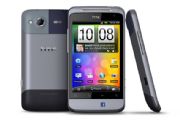
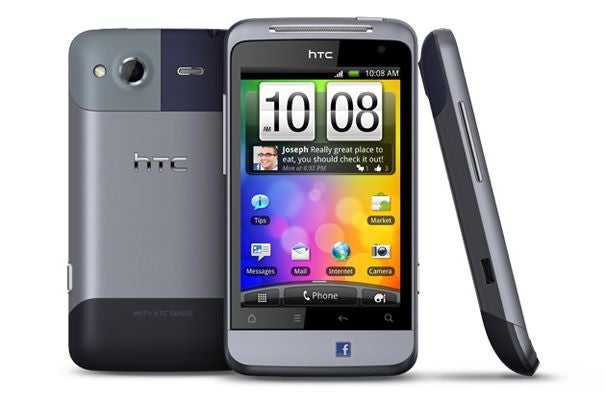
The Facebook Phone: Busting the MythThe Facebook Phone could be the next tech product to follow the recently launched Google Drive from the land of myth into reality, according to an online report. Taiwan-based phone maker HTC is reportedly working with Facebook to produce an Android-based device that will "enable and integrate all functions available on the social networking site." The purported new phone could be available as early as midsummer, according to DigiTimes.
Despite repeated denials and HTC-branded Facebook busts such as the Salsa and Chacha, there are several reasons for HTC and Facebook to work together DigiTimes says. HTC wants an exclusive smartphone hit since the chances of HTC producing another Android flagship phone, such as the Nexus One, appear slim. Google currently favors Samsung to produce fresh Nexus devices including the Nexus S and Galaxy Nexus. Meanwhile, Facebook purportedly wants its own phone because the social network needs to find new sources of revenue after it goes public this year.
Those sound like solid reasons, but I'm not buying it. Facebook may have to answer to shareholders soon, but so far the company has found success by putting its apps and plug-ins on every website, smartphone and tablet it can find instead of concentrating on hardware.
Facebook's chief executive, Mark Zuckerberg, says as much almost every time these Facebook phone rumors come up. "Our goal is not to build a phone that competes with the iPhone or anything like that," Zuckerberg told Bloomberg News in late 2010.

Afterthoughts are Bad

The Facebook Phone: Busting the MythThe HTC SalsaFacebook has done a fairly good job of updating and releasing new mobile apps for smartphone platforms such as Android and iOS, despite taking a ridiculously long time to produce a native iPad app. But if the company focused on its own mobile devices, that could come at the cost of competing platforms.
Just look at Google, which is constantly leaving its iOS apps as an afterthought in favor of Android. The search giant was excoriated for producing a substandard Gmail app for iOS in November, and the recently launched Google Drive service currently lacks native iOS support.
Whether Google is deliberately screwing up its iOS apps is debatable, but it's clear the incentive is for the company to deliver high-quality features for its own mobile platform first. That way of thinking does not appear to be go along with Facebook's "be everywhere" tactic. And let's not forget Facebook's bigger priority right now is developing its new mobile advertising strategy across all devices.
As for HTC, why would the phone maker want to take another run at a Facebook phone after the Salsa and Chacha? Those phones even had dedicated Facebook buttons on them, how much more integrated can you get? Besides HTC's big product line right now is its "One" series such as the recently released and critically acclaimed One S. Unless a Facebook One is in the works, I wouldn't bet on another HTC Facebook phone anytime soon.

For more Info: Click Hare
Get Sexy Bikini Girls Photo : Click Hare

Tuesday, April 10, 2012

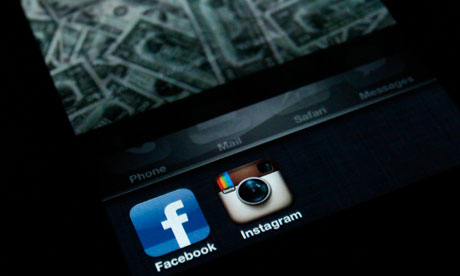
Facebook Buys "Instagram" Photo Sharing Network At $1bn - News Tech Book

 Instagram Getting Sold
Kevin Systrom, the 26-year-old CEO of the San-Francisco based photo-sharing service, which was started just 15 months ago, will net an estimated $400 million. Co-founder Mike Krieger, who holds a 10 per cent stake, and will earn around $100 million.
Facebook's chief executive Mark Zuckerberg has pledged to continue to develop Instagram as a separate brand, allowing it to post to rival networks.
"We plan on keeping features like the ability to post to other social networks, the ability to not share your Instagrams on Facebook if you want, and the ability to have followers and follow people separately from your friends on Facebook."

The app is free and allows users to apply 17 filters to the pictures they take - changing the colour balance to give the images a different feel - before they are uploaded.It has proven hugely popular. The firm says that it has more than 30 million users uploading more than 5 million new pictures every day.
Facebook has acquired photo-sharing app Instagram, a two-year-old start-up, for $1 billion in cash and shares. The deal was announced by Mark Zuckerberg on Facebook – but Instagram users immediately took to social networks to denounce the deal. For many, Facebook is already an internet hate-figure – and the prospect of an internet behemoth swallowing up a popular start-up seems to have caused a pretty strong backlash.
Instagram would do well to ignore the noise and remember their roots as they get pulled further into the Zuckerberg fold. Because the single rule of cool is that the way to lose it is to get too popular.