Recent Posts

Showing posts with label Game. Show all posts

Thursday, July 12, 2012

Android-Powered Ouya New Games Console!!

It’s not a secret that gamers are pining for new hardware. Whether that’s next-gen consoles or new handhelds, it doesn’t really matter, they just want something new to play games on. That seems to be where the fervor directed at Ouya comes into play.

For More Details, Click Hare 


Our own Jared Newman wrote about the console's unveiling and what you need to know already, but I find the whole concept of a new, Android-powered home console extremely interesting. Android isn’t what I would immediately think of if someone asked what operating system a low-cost home console should run on.
There’s a few reasons, but the biggest is the state of games on Android platforms. Take a minute to search through Google Play (formerly known as Android Market) and find some of the few games that have actually been optimized for Android tablets; there aren’t many. Now take that number, compared to the overall number of games available for Android, and try to estimate how many of those will be optimized for play on a television. Maybe a few dozen, at most?
Thousands of people are investing in a system that will be able to play a few dozen games at launch. That isn’t much. Sure, it’s all about investing in the future. Developers might start to optimize their titles once they realize that there’s a market for them, but that takes time. Unless developers can get their hands on final Ouya hardware a few months ahead of time, they won’t be ready for launch (The Ouya Kickstarter does claim that some developers will receive Ouya dev kits before the console launches -- Ed.). The Android OS is known for being very picky about the specific type of hardware that the user has. An application might work perfectly on one phone, but not at all on another, simply because of the onboard video card. That’s the first challenge that users are going to have to face, but there’s plenty of challenges ahead for developers as well.
One of the biggest issues with Android is piracy. The whole appeal of Ouya is that it’s open-source, the console manufacturer doesn’t decide what is allowed on the console and what isn’t. That also means that they don’t really decide how things go on the console. Any Android application is available illegally by simply searching for the name of the application and file type and I see that being the case for games released on Ouya as well. According the manufacturer, the console will have a USB port for expanded storage, and that could very well be used for this nefarious purpose.

One of the main features of Ouya is that some part of the game has to be free-to-play. Developers can charge for titles, but they have to offer some kind of demo or trial. It’s a good model, because most gamers want to be able to try something out before they put down their money. This is something that PlayStation has done a great job with; they offer 60-demos of most of their titles to PlayStation Plus users, and I’m hoping that we see something similar here. Even with this caveat, there are still full versions of games and with Ouya’s open-source nature, you can bet that someone will find a way to crack and distribute them. It’s something that developers are going to have to consider before putting in the effort and development time to optimize their titles for Ouya.
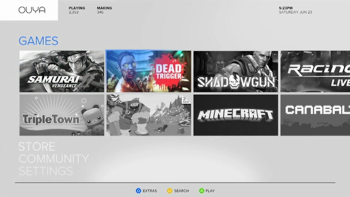
We really have no idea what Ouya could do. It’s an extremely novel concept and the Kickstarter video sold me on the UI (something that I always find troubling with Android), but there’s still so much that’s unknown. We don’t even know what the left side of the controller looks like! We can only hope that they reveal more information as the Kickstarter campaign continues. At the time of writing, they’ve raised over $3.2 million dollars and it has been less than 48 hours. That says something about what gamers are looking for.

For More Details, Click Hare 

Tuesday, June 5, 2012

Treyarch Pushes Beyond Modern Warfare With Call Of Duty: Black Ops 2 !!


Activision is pushing things forward with its Call of Duty franchise. Treyarch’s Black Ops 2 is on display at E3 2012 with an epic campaign storyline that propels the action to 2025. Fans of the ‘80s will also be in for a treat with some playable levels during that period in American history, which should serve as a nice contrast to the drone and robot-controlled future warfare gameplay. Mark Lamia, studio head at Treyarch, talks about what’s in store in this November 13 release in this exclusive interview.

Game On: What were your goals heading into Black Ops 2 after the success that we’ve seen, year after year, with each new Call of Duty game?
Mark Lamia: The goals coming in to Black Ops 2 were quite simply to push the boundaries of the franchise. Players have had a lot of great Call of Duty experiences leading up to this point and we were really excited about what we created with Black Ops, but that was our first time together as a studio. We felt like we had just really scratched the surface of what we could create. We felt we could do so much more, so we really wanted to introduce a lot of new elements to Call of Duty. It’s a difficult balancing act.
What are the challenges of trying new things with your fan base?
There are a lot of people who love their Call of Duty, but when you’re making a game for such a broad audience and you’re also making a game in a franchise that you’ve made a lot of like Treyarch has, we wanted to create new experiences for players. Black Ops characteristically had a lot of uniqueness to it and we wanted to use that as a launching point in creating Black Ops 2. That’s why we took not only the near-future fiction, but made it generation-spanning and had the characters from Black Ops 1 in the game. We’re going to continue their story, but also introduce new characters, juxtaposing different kinds of warfare. The warfare that people are more familiar with in Call of Duty games will be there with a totally new kind of warfare.
How does this near-future setting impact the historical aspect of past Treyarch games?
Call of Duty: Black Ops 2 E3 InterviewBlack Ops 2 features future tech, like battle drones.We’re setting it in the way we tell our fiction by looking at history and trying to explore things. There’s no history that’s written yet in the future, but we’re working with people who are experts in what’s going on in the near future in warfare and trying to leverage that to come up with our fiction. We also have new kinds of gameplay that takes advantage of all the advancements in robotics and drones, technology, and everything that that offers us. While we’re only getting into the campaign today, that mindset is pervasive throughout the entire studio. Everyone was excited coming out of Black Ops and really wanted to push not only on the campaign by introducing all this new kind of gameplay and story branching and strike force levels with sandbox gameplay and nonlinear campaign structures. That same mindset is what’s going on with the multiplayer team and on the Zombies team, as well.
Can you talk a little bit about Strike Force and what that opens up to the campaign storyline?
Strike Force was a goal that we had to create something that introduced nonlinear campaign structures and sandbox gameplay. We wanted to have something that had a significant element of replayability, which does come out of some of the sandbox gameplay. It also has an impact on the story. In a nutshell, Strike Force levels are all about the proxy wars that are going on in the year 2025. There’s this tension and this conflict that’s going on. Joint Special Operations Command, JSOC, comes to you in the middle of the campaign as the narrative is unfolding and tensions are rising. You’re given a choice of several global hot spots to bring your Black Ops team in and fight. It’s unlike anything we’ve ever done in a Call of Duty game because the player has a choice in the gameplay during the campaign.
What’s the experience like once you drop into one of these levels?
You have a choice of playing that level however you want because it’s sandbox gameplay. They’ll have unique objectives. You can take control of any of the soldiers on your squad. You can take over any of the toys of the battlefield. The drones are a great example of how we’re able to leverage the fiction for entirely new gameplay. You can fly the drones and fight with them. You can play with robots on the ground. It also allows you a good demonstration of what it’s like to fight against some of that technology that’s on the battlefield. In gameplay terms, we spent a lot of time having you fight against humans, now there are these robots and drones which have different strategies to taking them out. And you get to explore that in the campaign and the Strike Force levels.

Friday, June 1, 2012

Games Forecast: 5 Awesome Titles Coming Soon !!

 
 Games We're Looking Forward To
When it comes to games, if the first half of the year is for holiday leftovers and cool indie titles, the second half is for top-shelf blockbusters. This is when the big guns--the likes of Halo, Mario, and Call of Duty--come out to play.
Here are 10 games we're looking forward to playing in the second half of 2012.


Halo 4

 Platform: Xbox 360

Release date: November 6, 2012
Halo 4 is actually not the fourth game in the franchise, but it is the first game since 2007's Halo 3 to feature Master Chief as the protagonist. It's also the first Halo game by Microsoft's 343 Industries (original Halo developer Bungie has moved on to a yet-to-be-announced project with publisher Activision). Not much is known about Halo 4, but the single-player game will reportedly focus more on exploration than on straight-up action.


Dust 514 

Platform: PlayStation 3
Release date: Q2 2012
Dust 514 is more than just the generic free-to-play shooter that it looks like on the surface. It's connected to the universe of Eve Online, a huge and long-running space-strategy MMO, so the battles that players fight on the ground can create ripple effects in a grand, ongoing intergalactic war. This scenario sounds far more interesting than the heartless level-up grinds of so many other shooters.


Borderlands 2 

Platforms: PlayStation 3, Xbox 360, PC
Release date: September 18, 2012 (U.S.), September 21, 2012 (worldwide)
The original Borderlands was an intoxicating brew of first-person shooting and Diablo-style looting, but its unpolished narrative and brain-dead AI made it less than perfect. Borderlands 2 aims to refine the game's popular formula, all but ensuring a huge hit.


XCOM: Enemy Unknown 

Platforms: PlayStation 3, Xbox 360, PC
Release date: October 9, 2012 (U.S.), October 12, 2012 (Europe)
XCOM: Enemy Unknown is a reboot of the classic sci-fi strategy game from 1996, with modern sensibilities--such as over-the-shoulder camera angles and cover spots to hide behind--that lend a shooter vibe to the turn-by-turn action. Enemy Unknown won't be the first attempt at streamlining strategy gaming for the console-owning masses, but it looks promising.


Counter-Strike: Global Offensive 

Platforms: PlayStation 3, Xbox 360, PC
Release date: Summer 2012
Counter-Strike: Global Offensive is little more than a fresh coat of paint on a classic multiplayer shooter; for veteran PC gamers who drained hours into the original game, however, this remake could be just the excuse they need to dive back in. Like its predecessor, Global Offensive allows no respawns and no regenerating health, so careful strategy and teamwork are just as important as fast reflexes.

Friday, May 25, 2012

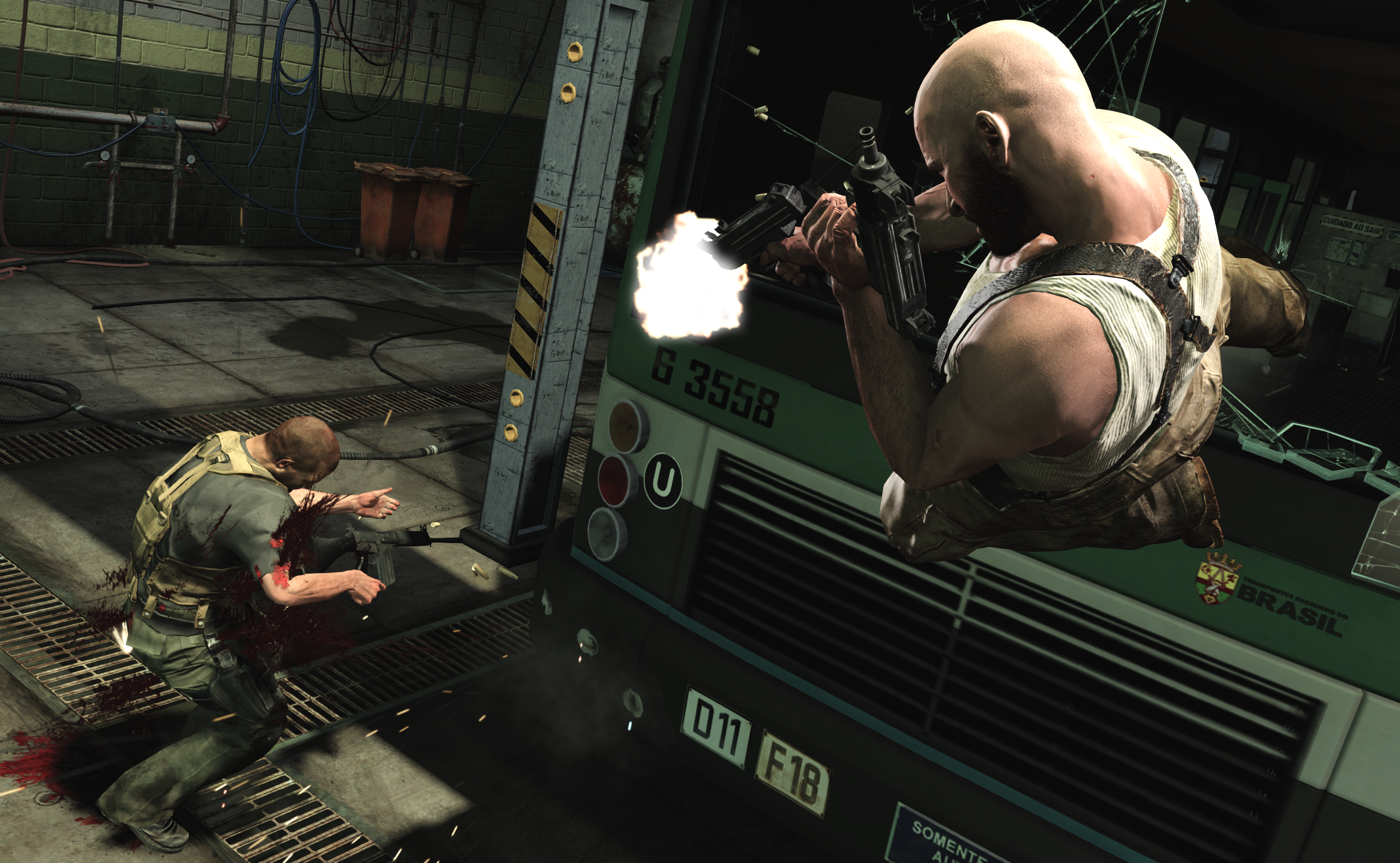
Max Payne 3 PC-Game: Developer Preview !!


After the success of the console release last week, the PC release of Max Payne 3 is highly anticipated. We caught up with Kevin Hoare, Lead PC Designer on Max Payne 3, to talk about the differences in this long-awaited sequel to Remedy Entertainment's classic nor-inspired action games. There's some good stuff in here, so keep an eye on this space for our upcoming Max Payne 3 review.
Game On: With such a long gap since Max Payne 2, what considerations did you have to take to bring Max up to speed with modern times?
Kevin Hoare: We had to consider what the first two games had accomplished, firstly. Max Payne was an incredibly groundbreaking game at the time in terms of both storytelling and gameplay. In terms of characterization, it was one of the first action games to have a fully developed protagonist - the use of comic-book cutscenes and Max’s noir-inspired internal monologue really put you in his head in a way most action games didn’t do back then. And then there’s the gameplay, which brought that highly choreographed Hong Kong action movie style into videogames by introducing Bullet Time. Bullet Time was never just about slow motion – it was about the idea that you could move and react to every bullet.
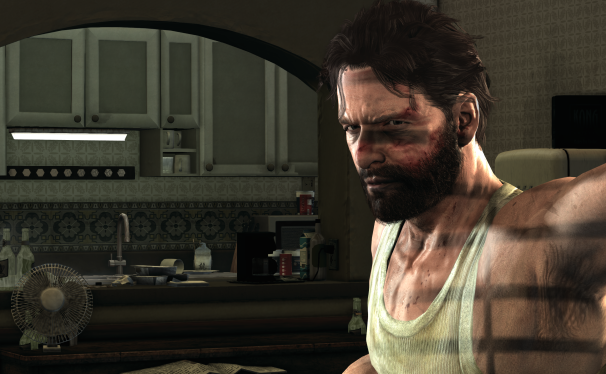
Max Payne 3 PC InterviewSo the initial goal was to modernize Max Payne gameplay. Max is a game about choreographed gunplay combined with stylish, fluid movement (both in real time and in Bullet Time). We didn’t want to sacrifice a thing, we wanted first-person precision and ease of targeting but we wanted all the things we love about third-person games in terms of being able to see your character move believably. So thanks to literally thousands of blended animations and physics states, you can aim and move in any direction you want at any time and in a whole range of poses – prone, vaulting over cover, during a shoot-dodge – and you’ll never lose your target, and Max appears to move naturally while you do it. Max can do his classic slow motion shootdodge dive in any direction, and he can now shoot 360 degrees from a prone position. At all times, the character gets out of the way of the reticle in a natural and believable way, and it makes Max Payne 3's combination of shooting and
movement really satisfying to play.
We also implemented NaturalMotion’s Euphoria character behavior system (the same animation egine employed in Grand Theft Auto IV and Red Dead Redemption -- Ed) into Max, more so than we’ve ever done in a lead character before. So Max responds to the world around him more realistically than ever – he’ll brace for impacts by tucking in his head if you throw him toward a wall, or he’ll lean out a hand if you dive him over objects. We also made sure to create separate animations for certain movements in Bullet Time as opposed to real time. We wanted every detail to be as close to perfect as we could get, so Max has a real sense of weight and purpose to the way he moves.
Max Payne 3 has a really intuitive cover system, something that was not around at the time of the original games, but it’s really more of a place to take a break, reload and strategize rather than the core gameplay mechanic. Max still uses painkillers for health rather than regenerating health, so hiding in cover doesn’t have the same advantages it does in a cover-based shooter. You have to keep moving or the A.I. will eventually flank you and flush you out.
Some things do not change – Max is still a pure shooter based on free-aim mechanics, though we do offer a range of aim sensitivities and targeting options for more casual players.
The Max Payne series has always been known for its wonderful art direction and take on the film noir setting; did you find it somewhat difficult to keep creating a new story while still sticking true to the setting you've established?
KH: Not at all. There’s an assumption that the location change meant that we were abandoning the game’s noir sensibilities, but everything about the game is very true to noir; it’s just less about winter in New York (although we have a lot of that too), which is not in itself that attached to noir. We wanted to continue to push Max’s story forward in a way that made sense for the character and the criminal undercurrents at all levels of Sao Paulo society are a fantastic place to put an armed, alcoholic ex-cop with a really troubled past and some serious personal issues. To be honest, to us a drunk, world weary ex-cop working for a glamourous rich family full of secrets (and unwittingly getting involved in a story that is bigger than it seems) is about as noir as it is possible to be.
You have James McCaffrey as not only the voice of Max Payne, but also the model. How different was it to have him taking on both roles for this game?
KH: It really helped to ground everyone’s performance. Suddenly James is not a disembodied voice but he’s there physically performing scenes with other actors, including some of the less stressful stunts. When you see Max leaping around the environments and shouting out as he thuds against a wall or the floor, that’s James. It helped flesh the character out as well – we now still have Max’s great monologues, and we have our own take on motion-comic cutscenes, but they’re also blended with traditional cutscenes to give the game its own unique feel.
This is the first Max Payne title developed by Rockstar Studios (a collaboration of Rockstar Vancouver, Rockstar New England, Rockstar London, and Rockstar Toronto) as opposed to Remedy on their own. How did this change development?
KH: We’ve been working on and off on this game for several years and Rockstar always had a very strong idea of what this game would be – we were trying to make what we thought a Max Payne game should be in the modern era, which is basically the most sophisticated and cinematic action-shooter we could possibly make. Studios share talent on most Rockstar games, but this was the first project that explicitly called it out as complete cross-studio collaboration, overseen by the core team in New York. It’s important that you have a level of consistency across the board when multiple studios work together, and we’re very lucky that the two founders of the company (Sam and Dan Houser) are very much involved in the creative process to keep everything together.
How much did you consult Remedy when you first took on the IP?
KH: We actually published the first two games, so we’ve been working with Remedy and been friends with them since pretty much the inception of both companies; in fact, we bought the IP around the time Max Payne 2 shipped. We remained friends with them since publishing the original two games, so it was natural to share builds with them as the game took shape and they’ve been nothing but supportive, which is a huge compliment. Early on they were somewhat distracted making Alan Wake, but they became more involved later on as their time allowed. For people who really want to glue Max Payne 3 and Max Payne 2 together or just want a refresher course in Max’s backstory, the 3-part comic series we are releasing (written by Dan Houser and Remedy’s Sam Lake) really covers the missing years. You can download the first issue now – issue 2 and 3 are out in the next few weeks.

Max is older and heavier, but you've used that to your advantage and had that affect the gameplay in different ways. What are some of the ways that Max's age changes things up a bit?
KH: There is definitely a sense of weight to the way he moves. Trying to create a third-person game that really felt good and animated beautifully was a massive part of what we were aiming for. That has an impact on gameplay in the sense that we didn’t want him to be an artificial game character that skates on artificial steps – we want his movement to be deliberate and believable. Every step Max takes is a real step; we want people to see the most realistic character we could possibly make on screen.
A while back you released your PC spec requirements. Some of them seem pretty hefty, which leads me to believe that PC was the lead platform. Is this the case?
KH: We didn’t have a lead platform; we opted instead to develop each platform in parallel, with each team focusing on the specific requirements of the hardware as we went along. That way, we could bring out all three versions as close to each other as possible, while still getting the most out of each specific platform. We’re really happy with how that turned out for the consoles, but we’re even happier with what it’s meant for the PC. We’ve closed the gap between console and PC release dates, which is something the community had been wanting us to do for a long time, and the PC version has been tested on a huge range of hardware.
In terms of the original list of specs we distributed, they were the extremes of the entire range that we had tested, from the lowest players could reasonably run, through to the most powerful rigs we could put together. We know that variety and customization is one of the strengths of the PC platform, so if you’re a hardcore PC player with an incredibly customized rig, our game is going to shine on your system. If you’re coming in at the bottom end, you’re still going to be able to have a great time playing Max Payne 3.
To give you another example, here is a more comprehensive breakdown of our recommendation on PC specs:
LOWEST TESTED SPECS
Windows 7/Vista/XP PC (32 or 64 bit)
Intel Dual Core 2.4 GHZ or AMD Dual Core 2.6 GHZ, or better
2GB System RAM
NVIDIA® GeForce 8600 GT 512MB RAM
or AMD Radeon™ HD 3400 512MB RAM
Low Recommended Specs
Windows 7/Vista/XP PC (32 or 64 bit)
Intel Dual Core 3GHz or AMD equivalent
3GB System RAM
NVIDIA® GeForce 450 512MB RAM
or AMD Radeon™ HD 4870 512MB RAM
At this level, you will be able to comfortably run the game at 30 frames per second with a 1920 by 1080 screen resolution.
High Recommended Specs
Windows 7/Vista (32 or 64 bit)
Intel i7 Quad Core 2.8Ghz or AMD equivalent
3GB System RAM
NVIDIA® GeForce 480 1GB RAM
or AMD Radeon™ HD 5870 1GB RAM
At this level, you will be able to comfortably run the game at 60 fps at 1920 by 1080.
Highest Tested Specs
Windows 7/Vista (64 bit)
Intel i7 3930K 6 Core x 3.06 GHZ
or AMD FX8150 8 Core x 3.6 GHZ
16GB System RAM
NVIDIA® GeForce® GTX 680 2GB RAM
or AMD Radeon™ HD 7970 3GB RAM
Of course, higher-spec rigs than those that we tested should also have no problem with the game – these tested specs are our way of letting everyone know that a massive amount of work has gone into ensuring that nearly any PC in this range will be able to run the game comfortably.
Fans want to know: will we be seeing more drug nightmare scenes in Max Payne 3?
Given all that Max has been through, the amount of booze and painkillers that the man has taken to try and block out the events of his life, and the predicament that he finds himself in once he arrives in Sao Paulo, it’s safe to say that his life becomes something of a nightmare. We relay that feeling to the player not just through one level, but through Max’s experiences as you progress through the game.
What are you doing to take advantage of the powerful hardware available in a PC?
As you can see from the specs list above, we’ve worked hard to make sure the game will run smoothly on a wide range of PC builds. But it’s when you get towards the top end of that range that you can really push a game to its limits, and the game will look and run incredibly on the most advanced current machines around at the moment and well into the near future.
You’ll find that screen resolution is scalable, there’s triple and even sextuple monitor support which helps to run higher screen resolutions, there’s various anti-aliasing options, scalable water quality, scalable shadow quality, increased detail for characters and vehicles and a scalable texture filter that further increases visual quality. We’re also supporting DX11 with Max Payne 3, with features including Hull/Tessellation/Domain Shaders (which adds curvature to the character/vehicle models), Gather4 (for optimized shadow sampling / FXAA), Geometry shader / Stream Output and DX11 texture samplers to name a few.
As you can tell, there’s a lot for PC fans with higher-spec hardware to sink their teeth in to.
35GB is a pretty hefty install size, even for a PC title. Why the large size? Are we seeing HD textures or better rendered cutscenes?
Both, and more. As we said earlier, one of the goals with Max Payne 3 on PC was to have a game that runs beautifully out of the box on day one across a wide range of machines. The PC is the only platform where you can really max out the high end if you want to, and we wanted Max Payne 3 on PC to have the potential to look beautiful on the highest possible resolutions on the biggest monitors available - so while we can still scale performance down to suit even reasonably low-end rigs, every asset is available at the highest resolution possible, from audio to video to textures.

The installed size of Max Payne 3 is due to the no-compromise quality of its assets, which already push console disc space to the limits. A good portion of the extra space requirements on PC can be attributed to the increased size of the textures, which are four times the size of those on consoles. In addition, the audio quality is significantly higher than the consoles due to lower compression rates, which improves audio fidelity. Again, this comes back to the range of possibilities that the PC platform opens up for us. That, combined with higher video settings when running the game, results in substantially better visual quality.
Assuming that there's full gamepad support, do you find that the gamepad works as well as the mouse and keyboard in Max Payne 3?
Correct, there is full gamepad support with Max Payne 3. We also wanted the kind of customizable options you get within a PC game to transfer over to the gamepad so players will be able to completely fine-tune the aiming mechanics to tailor them to their playing style and preference, something that PC gamers have come to expect with mouse and keyboard controls. You can change the reticule, alter the horizontal and vertical reticule speeds, remove or amend kill indicators, not to mention selecting your preferred aiming mechanic. It’s also worth mentioning that console players will also have these options; everything within this game across all platforms is about customization and player preference.
Thanks for reading, and keep an eye peeled for the PC version of Max Payne 3, which debuts on June 1st. Stay tuned for our full review!

Friday, April 27, 2012

New Way For Game: Game Downloader Review !!

Editorial Review of Game Downloader

So, you want to play a game and kill a few minutes or hours. But you don't want to spend any money, or install Steam (which can be a bit of a resource hog). You have two choices: Either play something in your browser, or grab one of the many fun and free Indie games offered on the Web. If the latter sounds more attractive, Game Downloader is a free and lightweight application that can help you find and legally download fun, free games.
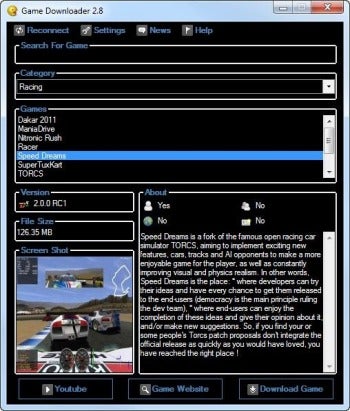
Game Downloader screenshotGame Downloader lists lots of information about each game, and includes a direct link to YouTube for watching game-related videos.You can get Game Downloader as an installer or a portable application requiring no installation. Both the installer and portable application pop up a UAC prompt asking forAdministrator privileges before running.
When you run Game Downloader, it opens a single compact window with a black background. Other than the odd choice of color, other controls are standard--just like any other Windows utility. There's a search box, but it only works if you know the exact name of the game you're after: For example, searching for "hedge" yields no results, even though Hedgewars is one of the games listed.
There is a Category drop-down letting you narrow down the selection to the type of game you're after, such as turn-based games, racing games, puzzles, and even music-based games like Frets on Fire. Once you pick a category, you can browse through the list of games. Game Downloader lists each game's version and file size, and includes a tiny screenshot and a text description of the game. There are also icons showing whether the game supports single-player mode, multi-player mode, or online play, and whether it requires a user account.
Since Game Downloader provides dry technical information about each game, it's not easy to pick something good. That's where the YouTube button comes in handy: Click it, and your default browser will load YouTube with a search query for the game's name. More often than not, you will find in-game videos, tutorials, and demos showing what you can expect if you download it.
Finally, there is the Download Game button, which grabs the game archive or installer. Unlike Steam, Game Downloader doesn't try to be a library. It downloads the game for you, but you step through the installer yourself (if the game has one).
Game Downloader doesn't come with many bells and whistles, but it's an effective catalog of free Windows games. I only wish it had user reviews like those in the iOS App Store or Google Play.

Game Downloader

  • Version: 2.8
  • Downloads Count: 0
  • License Type: Free
  • Price: Free
  • Date Added: Apr 27, 2012
  • Operating Systems: Microsoft Windows 7, Microsoft Windows Vista, Microsoft Windows XP
  • Requirements: Microsoft .NET Framework 3.5
  • File Size: 730.0 KB
  • Author: dev-fire

For More Click Hare

Download Sexy Girls Photo, Click Hare