Recent Posts

Showing posts with label News. Show all posts

Saturday, June 23, 2012

AMD Radeon HD 7970 GHz Edition !!eXclusive!!

 AMD Radeon HD 7970 GHz Edition 

AMD Radeon HD 7970 GHz Edition Review

AMD shipped its original Radeon HD 7970 in December 2011, and for a brief period, this 4.3-billion-transistor monster held the graphics performance crown. Several months later, Nvidia launched the GTX 680, a power-efficient graphics card that retook the slot as the best single GPU card for gaming.
In some ways, though, the GTX 680 is an odd beast. Nvidia has been reluctant to supply what's called GPU compute performance, and it’s been suggested that Nvidia deemphasized the compute performance in search of gaming performance glory. The latest GTX 680 drivers don’t support OpenCL 1.2 (more on that later), though you can still run Nvidia’s own CUDA framework for GPU compute.
That’s proved a good product strategy, but now we’re starting to see a new generation of games that integrate GPU compute features into the game, either using DirectCompute or OpenCL. We’ll take a look at a couple of these games later. For now, let’s run down the key differences between the original and the new card.
Feature Radeon HD 7970 Radeon 7970 GHz Edition
Graphics Cores 2048 2048
Texture Units 128 128
ROPs 32 32
Base Clock Frequency 925 MHz 1006 MHz
Boost Clock Frequency NA 1050 MHz
Memory (Frequency) 3GB GDDR5 (1376 MHz) 3GB GDDR5 (1500 MHz)
Memory Interface 384-bit 384-bit
Transistor Count 4.3 billion 4.3 billion
Display Connectors 1 x Dual Link DVI, 1 x HDMI 1.4a (Fast), 2 x mini-DisplayPort 1.2 2 x Dual Link DVI, 1 x HDMI 1.4a (Fast), 2 x mini-DisplayPort 1.2
Power Connectors 1 x 8-pin, 1 x 6-pin PCIe 1 x 8-pin, 1 x 6-pin PCIe
Thermal Design Power (TDP) 250W 250W
AMD claims the core clock boost from 925MHz to 1GHz is due to better understanding of the manufacturing process and a few tweaks to that process. The reference card has a sticker on the back labeled “Rev 02”, though that probably refers to the card as a whole. Since a number of AMD partners already ship cards running in excess of 1GHz, officially supporting that clock speed isn’t a surprise.
AMD is also building the new version with faster memory—the same 6GHz effective memory that Nvidia uses on the GTX 680. But perhaps most interesting is the new “boost clock”—something that Nvidia implemented in the GTX 680. AMD tweaked its PowerTune technology, which manages the power envelope of the card, to allow for slightly higher core clock speeds if power demands aren’t too high.


It’s pretty simple: AMD simply added new P-states to PowerTune to allow for higher clock rates for short periods of time, when needed.

The Test System

All our performance and power tests were run on our standard graphics test system:
  • Intel Core i7-3960X @ 3.3GHz
  • Asus P9X79 deluxe motherboard
  • Intel RT2011 sealed liquid CPU cooler
  • 16GB Corsair DDR-1600 memory (quad-channel)
  • Corsair AX1200 power supply
  • 1TB Seagate 7200.12 HDD
  • Asus Blu-ray reader / DVD writer
  • Corsair Graphite 600T case
The system was not overclocked. A Watts Up Pro USB power meter collected the system power data. All the game tests are reported at 2560 x 1600 pixel resolution with 4x multisampling antialiasing enabled.

Power Draw

The architecture hasn’t changed, and the AMD reference card looks nearly identical, right down to the display connectors and fan. However, PowerTune Boost, the higher core clock speed, and the faster memory does come at a cost—while idle power is actually a little better than the original, at 120W (versus 124W for the first Radeon HD 7970), full load power is a whopping 384W, over 18 percent higher than the 324W maximum power draw on the original HD 7970. The GTX is more power-efficient than either card, at 119W idle and 318W under load. Note that the HD 7970 GHz Edition still uses the same power connectors as the first 7970—one 8-pin PCIe power connector and one 6-pin connector. The new AMD progeny is the same 11-inch length as the original; both are a half-inch longer than the GTX 680.
These are power ratings for a system with a 1200W PSU.
What this also means is that the card may be louder, depending on the cooling system design. Certainly the reference GHz Edition card is noisier under full load than the original HD 7970.
Given the right case and cooling system, though, noise can be mitigated somewhat. How does the card peform? We ran through a number of our standard synthetic and game benchmarks, plus a pair of new game tests, which make heavier use of GPU compute.

The 3DMarks

Nvidia’s GTX 680 has an impressive tessellation engine, which is reflected in the 3DMark 2011 score. That’s the one benchmark that demonstrated a significant advantage for the GTX 680. The 3DMark Vantage test uses DirectX 10, so it’s a closer race in that benchmark.

Game Performance

But it is game performance that’s important here, so let’s see how our suite of games runs on the three GPUs. First, we’ll look at the older tests, which aren’t as GPU-compute-heavy.
The original 7970 has a slight edge over the GTX 680 in Crysis 2. The GHz Edition Radeon opens up a bigger lead.
The GTX 680 had a strong lead over the original HD 7970, but the GHz Edition 7970 wins out.
In Metro 2033, the two Radeons have little difference, but the GTX 680 seems to lag in this game test.
The faster memory, wider memory bus, and higher core clocks give the new GHz Edition 7970 a big boost in DiRT 3.
The newer Radeon performs noticeably better than the original, and outpaces the GTX 680 as well. So the higher core clock and faster memory (combined with the 384-bit memory interface) help substantially.
Now let’s turn to a couple of newer game titles that make heavier use of GPU compute. Sniper Elite V2 uses supersampling plus DirectCompute accelerated antialiasing. DirectCompute is also used for high-dynamic-range ambient occlusion shadow effects and depth-of-field calculations. DiRT Showdown is the first game shipped to use global illumination, plus other advanced lighting techniques.
Here, the differences are more dramatic. AMD’s focus on building a GPU that performs well in both graphics and GPU compute seems to have paid off. Note that we didn’t test GPU compute heavily, but it’s worth noting that the latest version of Winzip, Winzip 16.5, offers an option to enable OpenCL GPU acceleration to compress files. It does make a difference—an 8GB folder took about 10 percent less time. However, this option doesn’t appear when a GTX 680 is installed, even with the latest 304.48 beta drivers.

Final Thoughts

Competition is great for consumers. AMD will be shipping the Radeon HD 7970 GHz Edition in the next couple of weeks, at roughly $499—$100 cheaper than the original and in the same price ballpark as the GTX 680. On a purely performance basis, the new Radeon wins out over the GTX 680, albeit with a hefty power hit. However, the GTX 680 is quieter, consumes less power, and is more compact. That may affect your choice. But if you’re looking for the fastest single GPU card available, AMD seems to have retaken the crown.

Sunday, June 17, 2012

Rare Working Apple-1 Computer Sells for Record $374,500!!

A 36-year-old Apple-1 personal computer, one of just six thought to be in working condition, sold for a record $374,500 at a New York auction.
Also sold by Sotheby's Friday: A memo written by former Apple CEO Steve Jobs during his time at video game maker Atari.
It may not look like much, but this 1976 Apple-1 computers -- a circuit board -- just sold for $374,500, a record, at a Sotheby's auction. (Image: Sotheby's.)
The gavel price for the Apple 1, which included the buyer's premium -- the commission owed to auctioneer Sotheby's -- was nearly twice the top estimate of $180,000 and triple the low-ball prediction of $120,000. (See also "Recreating the Apple-1").
It was a record for an Apple-1, the first computer from the company co-founded by Steve Jobs and Steve Wozniak. The previous record of $213,000 was set in late 2010 at an auction conducted by Christie's in London.
Friday's price was 76 percent higher than the 2010 Apple-1 sale.
Sotheby's did not reveal the name of the buyer of either the Apple 1 or the memo, and did not reply to questions Friday. The BBC, however, reported that a telephone bidder won the auction for the Apple 1.
The Apple-1, a circuit board hand-built by Apple co-founder Steve Wozniak, was made in 1976, and sold at the time for $666.66. About 200 units were produced, but by Sotheby's estimate, only 50 survive. Six, including the one sold Friday, are known to be in working condition. (See also "The Most Collectible PCs of All Time.")
Included with the Apple 1 lot was an original cassette interface -- cassette tapes were used to store programs and data -- and several manuals, including a rare BASIC user's manual.
The four-page Jobs-authored memo sold for $27,500, also significantly higher than the auction house's preliminary estimate of $10,000 to $15,000.
Steve JobsThat memorandum and an accompanying one-page addendum were written by Jobs in 1974 during a short stint with game-maker Atari, and included his suggestions for improvements on World Cup, a coin arcade game of the time. The lot featured three original circuit diagrams drawn by Jobs in pencil and the one-page hand-written addendum.
Although both the Apple 1 and the memo sold for well above their estimates, neither came close to the $1.6 million paid by a Miami executive last year for the original contract that marked Apple's founding. Jobs, who died in October 2011, Wozniak and the lesser-known Ron Wayne drew up the contract in April 1976.
Sotheby's also handled the sale of the Apple contract.
It may not look like much, but this 1976 Apple-1 computers -- a circuit board -- just sold for $374,500, a record, at a Sotheby's auction. (Image: Sotheby's.)
Gregg Keizer covers Microsoft, security issues, Apple, Web browsers and general technology breaking news for Computerworld. 

Saturday, June 9, 2012

Another Breach Reveals Weak Passwords: Protect YoursSelf!!

It has been 18 months since more than 188,000 passwords for subscribers to Gawker were snatched by hackers and posted to the Web, but consumers don't seem any more inclined to protect their passwords now than they were then.
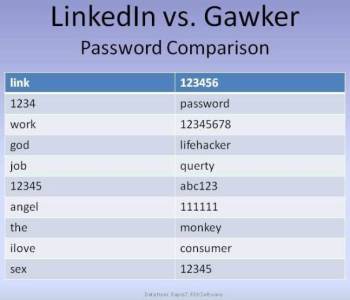
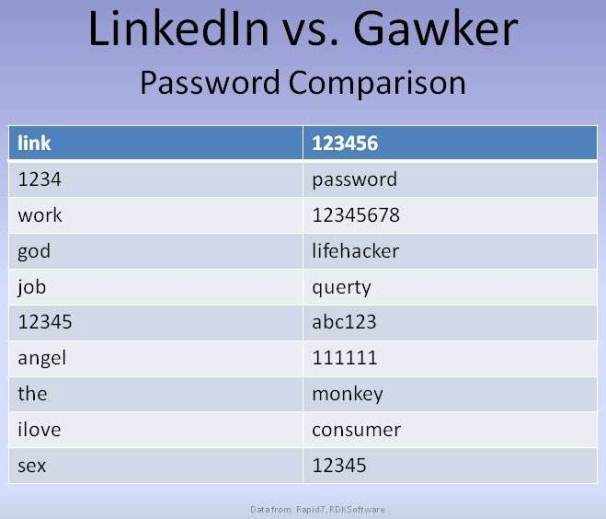
An analysis of the most common passwords found among the millions posted to the Net after digital desperadoes clipped them from LinkedIn reveals similarities between them and the favorites of Gawker users.
For example, consecutive numbers are popular with both groups. Two of the top ten passwords for LinkedIn members were 1234 and 12345, while three passwords in the Gawker top ten were 12345, 123456 and 12345678.
Gawker's top ten also had a non-consecutive number, 111111, and an alpha numeric consecutive, abc123. Other top ten passwords for the site were less obvious, but not very strong either: lifehacker, monkey, and consumer.
LinkedIn members tended to stay away from old standbys of lazy password pickers like password and qwerty -- both in the Gawker top ten -- and focused on business (job and work were in their top ten), sex (sex and ilove) or religion (god and angel).
It's obvious that really short passwords were acceptable to LinkedIn, as evidenced in "the" making its members' top ten list. Using the name of a site for a password is also a common practice among hasty password pickers. But we all know how busy business people can be and apparently many LinkedIn members didn't have time to complete the name of the site in the password field and just used "link" instead.
If you're concerned about whether or not your password was compromised in the LinkedIn breach and haven't been informed yet by the network about it, you can check out your password at LastPass or LeakedIn.
If you're looking for tips on creating a strong password, there are plenty of folks on the Net that can advise you on that subject, including Microsoft and Google. See also PCWorld's tips at "Create a Different, Secure, Easy-to-Remember Password for Every Site.")
If you're wondering how strong the passwords you're using are, you can test them at How Secure Is My Password? For example, a password like 123456 would be cracked almost instantly.
By the way, if all this information about strong passwords makes your head hurt, How Secure has a companion site that will create for you strong passwords like 4shkenaz!Sp!tt!ng, which would take a desktop PC 14 quadrillion years to crack.

Friday, June 8, 2012

Why You Don't Need to Work in an Office Again !!

How to Ditch Your Office for Good The virtual workforce. Telecommuting. Mobility baked into everything. The cloud.
Nearly all the big trends facing small companies doing business in the '10s speak to the increasing irrelevance of one of the hallmarks of the working world: the office.
We’ve all worked there, whether we had an individual office with a window and a door, or just a small patch of carpet in a sea of cubicles. And generally an office isn’t a bad place to spend the day: It has climate control, an IT department to fix problems, and sometimes even free coffee. But most of all, offices offer camaraderie, and the chance for employees to have impromptu meetings and bounce ideas off one another.
Unfortunately, offices are also terribly, terribly expensive. Even in the down economy, real estate in a prime area such as midtown Manhattan can cost $50 per square foot per month and up, and that’s not including utilities, furniture, and build-out expenses.
So maybe you don’t need an office after all. With a largely mobile workforce that is often working from home, a car, or a nearby café, what’s the point of stocking a fridge that no one will ever use? Why not ditch the office for good and go 100 percent office-free?
Many people already do this, but if your job involves more than just tapping away on your laptop and making the occasional phone call, running a company without an office can be challenging.
Here are the big issues--and how to address them.

Dealing With Employees

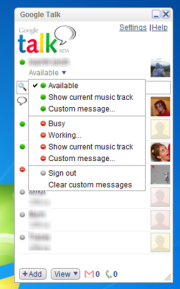
Instant messaging services, such as Google Talk or AIM, are great tools for communicating with--and keeping track of--far-flung employees.
How to Ditch Your Office for Good
One of the biggest fears that many employers have about telecommuting is the worry that remote employees won’t do their jobs. Leave staffers alone at home all day, and they’ll just watch TV, do the laundry, or play hooky, leaving you to foot the bill for a day off. Those concerns seem to be misplaced, however. In fact, some studies have shown that employees who have more flexibility (including telecommuting options) work harder and longer than if they were at the office. This is why many employers are happy to outfit their staff with smartphones and laptops: A mobile device makes it incredibly easy to take your work home with you.
Of course, managing remote employees isn't always smooth sailing, and it's quite possible that your key people will decide to take a long lunch when you need them the most. The solution is largely one of setting expectations. Even if your employees are never in the office, they need to know that you expect them to act as if they were. Set working hours and a specific lunchtime if necessary, and require your staff to stick to the schedule. This policy should be in writing, either in a person's offer letter or as part of your employee handbook. If employees can't stick to the schedule for some reason, tell them that they need to let you know well in advance. An office employee wouldn’t think of leaving for a doctor’s appointment without notifying the boss, and there’s no reason a remote worker should do so either.
Making the rules of remote working crystal clear should mitigate most management problems.

Communication

Another big challenge with remote work involves communicating. You can’t just walk over and drop a file on a junior staffer’s desk or round up a few people for a quick meeting. So how do you keep in touch, and keep everyone on the same page?
Instant messaging has been the communications medium of choice for most virtual or far-flung organizations. Choose a platform, and require all staffers to sign in to their account at the beginning of each workday. If employees aren’t going to be available for a while, whether it’s for lunch or other duties, have them update their IM status to reflect where they are and when they’ll be back.
How to Ditch Your Office for Good
OoVoo offers an inexpensive videoconferencing service for as many as 12 participants; in fact, it's free if you can tolerate ads.Of course, having a workable phone network is critical too. Although many people have forsaken landlines these days, if employees’ cell phone reception isn’t perfect, they’ll need to change networks, acquire a VoIP system, or even invest in old-school wires. As a small-business owner, you may have to pay for some or all of this expense.
If you want to get really advanced, you can look into having group video chats with your staff. OoVoo supports video chats with up to 12 participants (free with ads; $3 per user per month without ads). Skype Premium supports up to 10 simultaneous participants for $5 per user per month. Just make sure everyone has a very fast network connection.

Monday, June 4, 2012

Microsoft SmartGlass, Halo 4, and the IE browser on Xbox !!

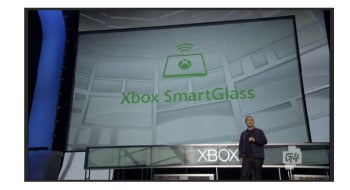
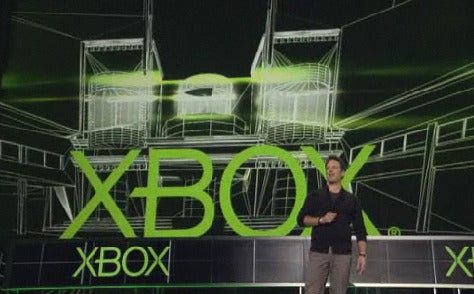
Microsoft took center stage at the Electronic Entertainment Expo on Monday introducing new software called SmartGlass designed to make sharing content across devices such as a game console, tablet, and smartphone a breeze. During its press conference the tech giant also announced a slew of new game titles, most notably Halo 4, along with sharing details for porting the Internet Explorer web browser to the Xbox 360 console.
Microsoft's overriding theme was to make the Xbox the central hub for your entertainment needs reaching beyond the console to work with Windows PCs, iOS devices, Android tablets, and upcoming Windows 8 PCs. Microsoft is also using the Xbox to take a stab at Google TV with Internet Explorer headed to Xbox later this year. And coming soon to Xbox 360 are a number of new additions to popular game franchises including Halo 4, Gears of War: Judgment, Call of Duty: Black Ops II, Madden NFL 13, and Tomb Raider.
Here's a quick rundown of the highlights from Microsoft's E3 2012 press event.
SmartGlass
With SmartGlass technology Microsoft is aiming to make Xbox a seamless entertainment experience that lets you easily transfer content between devices no matter which platform you're using. SmartGlass software can transform the devices you already know and love, said Mark Whitten, Microsoft's Xbox Live chief.
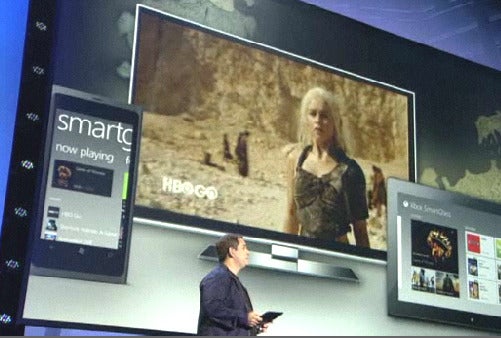
With SmartGlass technology, you will be able to start watching a movie on your tablet and then transfer the content to your Xbox 360 with one tap without losing your spot in the film. While you watch via your Xbox, your tablet will then display information about the film you're watching such as cast and crew credits. In another interesting demo, Microsoft showed how you could watch HBO's popular series Game of Thrones on your TV while your tablet shows you an interactive map of Westeros (the imaginary land where Game of Thrones takes place). The map tracks where you are in the show's timeline and lets you see where other major characters are in their journeys.
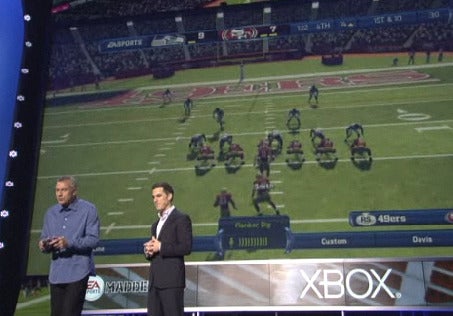
SmartGlass can also turn your tablet into a controller. Microsoft showed a video demo of using SmartGlass on a tablet to play Madden NFL by designing plays and controlling your team.
The new SmartGlass app will be available for Windows 8 devices, Windows Phone, iOS, and Android devices.
 
Xbox As Entertainment Hub
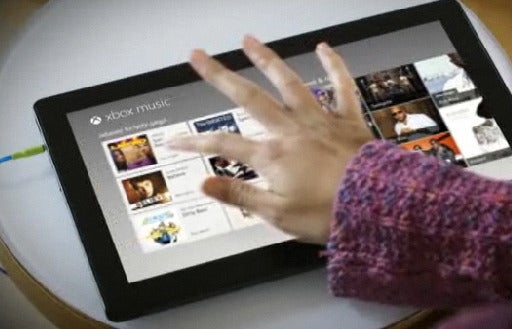
Forget about Zune, Microsoft is turning Xbox into its all-in-one entertainment brand. Coming soon will be Xbox Music an online music service featuring more than 30 million tracks and available on Windows 8 PCs and tablets, Windows Phone, and Xbox 360. Microsoft also announced new video content partners for Xbox such as Paramount Pictures, Univision, and Machinima. The NHL and NBA online subscription streaming packages will be available on Xbox 360 for each sport's new season later this year. ESPN is also expanding its Xbox offerings with live programming from ESPN, ESPN 2, ESPN 3 and ESPN U.
Microsoft is also expanding the reach of the Xbox brand by including apps for Xbox games, video, music, and Xbox SmartGlass on Windows 8 tablets and PCs when the new OS launches, expected later in 2012.
 
Internet Explorer
Microsoft's Web browser is coming to Xbox 360 in the fall with a new Web hub that lets you navigate online content using Kinect voice and motion control, or use the SmartGlass app to turn your mobile device into a virtual touchpad. Internet Explorer will have the same Metro-style look as Internet Explorer 10 in Windows 8. IE on Xbox 360 turns any TV into a SmartTV, Microsoft said.
The Games
Halo 4: The next installment in the popular gaming series for Xbox heralds the return of John “Master Chief” 117 as the main character. Due out November 6, 2012.
Gears of War: Judgment: A prequel to the original Gears of War coming in 2013.
Call of Duty: Black Ops II: The latest in this franchise will launch first on Xbox 360. The video during Microsoft's E3 event showed a section of the game taking place in Los Angeles where terrorists and drone airplanes are wreaking havoc, while G20 leaders the world over are under attack.
Madden NFL 13: Electronic Arts has some big plans for this year's version of Madden NFL. EA is making the biggest investment in gameplay in franchise history, EA's head of sports, Andrew Wilson said. You will be able to use Kinect voice recognition to call plays, audibles, “set, hike,” or give direction to individual players. You can also use Kinect voice to power your defense. Madden NFL hits stores on August 28.
FIFA 13: Another big hit form EA with Kinect voice recognition lets you give your team clear commands for offense and defense. There is also a referee feedback feature that keeps track of how you react to calls and how often you swear at calls and have other negative reaction to the game.
Splinter Cell Blacklist: The latest game in this popular series is set on the Iran-Iraq border where you battle terrorists who have a list of U.S. targets called the Blacklist. Your job is to stop the next Blacklist killing. Blacklist will feature Kinect voice control to let you control your team and do classic Splinter Cell moves like saying, “Hey, you” to lure a terrorist towards you and then finish him off. Splinter Cell Blacklist ships in Spring 2013.
Fable The Journey: A fantasy game that uses Kinect motion control. Hits stores this holiday season.
Nike Plus Kinect Training: Personal Training-style program that guides you through workouts, assesses your performance and gives you feedback with reports on how you're doing. Coming Holidays 2012.
Forza Horizon: A new action racer that mixes Forza motorsports with open road racing. Shipping in fall 2012.
Tomb Raider: Lara Croft is back with a new mature direction for Tomb Raider. Due out in 2013. Game makers Crystal Studios also announced that the first piece of downloadable content for the new Tomb Raider will come first exclusively to Xbox 360.
Resident Evil 6: Capcom showed off the latest version of its dramatic horror franchise coming in late 2012.
Wreckateer: A new Kinect-powered slingshot game coming exclusively to Xbox Live. The basic idea is to wreck castles using a giant slingshot. Launching this summer.
South Park: The Stick of Truth: This RPG basically looks like a giant mash-up of everything you've ever seen on South Park. And it's no wonder. South Park co-creator Matt Stone said during Microsoft's event that he and partner Trey Parker wanted to create a game that made you feel like you were in an episode of South Park. The game looks just like the show and involves you trying to become the fifth member of the South Park gang that includes Kyle, Kenny, Stan, and Cartman. Coming March 2013.
Dance Central 3: Kinect-powered with moves from the past and the present, coming this fall.
There were also teases for three new Xbox 360 exclusive franchises coming in 2013 including an Asian-style demons and dragons adventure game called Ascend New Gods. LocoCycle from Twisted Pixel, and a Tron-like maze game called Matter from filmmaker Gore Verbinski.

Saturday, June 2, 2012

Samsung Galaxy S III : Reveals Some Interesting Secrets !!

 
[Credit: iFixit]We're immensely jealous of our friends over at iFixit and Chipworks who got their hands on the hotly anticipated Samsung Galaxy S III. Doing what they do best--tearing things apart to show you how to fix them yourself--the two teams give us a look inside Samsung's monstrous new phone. While I'm not going to cover every single thing that iFixit and Chipworks found inside of the phone--you can see that for yourself on their website--here are some of the highlights.
The Galaxy S III has a 2100mAh battery which, while not as big as the 3300mAh battery in the Droid RAZR Maxx, is still bigger than the 1750mAH battery that comes with the Samsung Galaxy Nexus. The battery also contains the phone's NFC chip, and humorously asks that users consult the phone's manual before use.
 
[Credit: iFixit]
The glass on the phone is fused to the display (which, in turn, is fused to the frame on the Galaxy S III), and iFixit points out that this will likely increase the cost of replacing your screen should you ever drop your phone and crack it. Samsung is utilizing Corning Gorilla Glass 2 for the Galaxy S III's display, which is supposed to be as tough as the original while being 20 percent thinner. But iFixit also notes that Corning isn't saying whether or not the new glass is any better at resisting damage.
The most interesting thing that this teardown revealed, however, is that the Galaxy S III's 8-megapixel camera uses the same sensor found in the iPhone 4S. Whether or not the Galaxy S III takes better pictures than the iPhone 4S remains to be seen, but we'll have a complete camera comparison between the two phones our S III shows up in the mail. One place where the Galaxy S III definitely has Apple beat is on its front-facing camera: At 1.9-megapixels, it's likely that the Galaxy S III's camera will be vastly better than the VGA camera on the iPhone 4S.
The iFixit team has yet to give the phone a Repairability Score, but they should have one up sometime in the near future. Be sure to check back here for more Samsung Galaxy S III news and a full review of the phone when it shows up in our mailbox.

Friday, June 1, 2012

Games Forecast: 5 Awesome Titles Coming Soon !!

 
 Games We're Looking Forward To
When it comes to games, if the first half of the year is for holiday leftovers and cool indie titles, the second half is for top-shelf blockbusters. This is when the big guns--the likes of Halo, Mario, and Call of Duty--come out to play.
Here are 10 games we're looking forward to playing in the second half of 2012.


Halo 4

 Platform: Xbox 360

Release date: November 6, 2012
Halo 4 is actually not the fourth game in the franchise, but it is the first game since 2007's Halo 3 to feature Master Chief as the protagonist. It's also the first Halo game by Microsoft's 343 Industries (original Halo developer Bungie has moved on to a yet-to-be-announced project with publisher Activision). Not much is known about Halo 4, but the single-player game will reportedly focus more on exploration than on straight-up action.


Dust 514 

Platform: PlayStation 3
Release date: Q2 2012
Dust 514 is more than just the generic free-to-play shooter that it looks like on the surface. It's connected to the universe of Eve Online, a huge and long-running space-strategy MMO, so the battles that players fight on the ground can create ripple effects in a grand, ongoing intergalactic war. This scenario sounds far more interesting than the heartless level-up grinds of so many other shooters.


Borderlands 2 

Platforms: PlayStation 3, Xbox 360, PC
Release date: September 18, 2012 (U.S.), September 21, 2012 (worldwide)
The original Borderlands was an intoxicating brew of first-person shooting and Diablo-style looting, but its unpolished narrative and brain-dead AI made it less than perfect. Borderlands 2 aims to refine the game's popular formula, all but ensuring a huge hit.


XCOM: Enemy Unknown 

Platforms: PlayStation 3, Xbox 360, PC
Release date: October 9, 2012 (U.S.), October 12, 2012 (Europe)
XCOM: Enemy Unknown is a reboot of the classic sci-fi strategy game from 1996, with modern sensibilities--such as over-the-shoulder camera angles and cover spots to hide behind--that lend a shooter vibe to the turn-by-turn action. Enemy Unknown won't be the first attempt at streamlining strategy gaming for the console-owning masses, but it looks promising.


Counter-Strike: Global Offensive 

Platforms: PlayStation 3, Xbox 360, PC
Release date: Summer 2012
Counter-Strike: Global Offensive is little more than a fresh coat of paint on a classic multiplayer shooter; for veteran PC gamers who drained hours into the original game, however, this remake could be just the excuse they need to dive back in. Like its predecessor, Global Offensive allows no respawns and no regenerating health, so careful strategy and teamwork are just as important as fast reflexes.

E3 Preview: What We Up at E3 2012

E3 2012 PreviewThe 17th annual Electronic Entertainment Expo kicks off next week in Los Angeles, and PCWorld editors will be scouring the show floor all week in search of the most interesting gaming hardware and software. We learned a lot from our time at E3 2011, but it’s still tough to predict what the big news will be at E3 this year. Some of PCWorld’s most passionate gamers took time to share their opinions on what to expect from E3 2012; read on for their thoughts, share your own in the comments, and bookmark PCWorld’s Game On blog to stay on top of our E3 2012 coverage.
E3 2012 Preview
Alex Wawro covers games, how-tos, and security for ITNewsTouch.
What to Expect: It will be a quiet E3 this year, if you’re hoping for surprise announcements about the next generation of gaming consoles. I predict that we won’t see any new hardware from Microsoft or Sony; at best, we’ll get sizzle reels during their respective press conferences that tease us with the features and specs of a new Xbox or PlayStation in 2013. Given the success of Microsoft’s subscription-subsidized $99 Xbox 360, it’s not crazy to think that Sony may release a budget version of the PS3 this holiday season that costs less than $100 and requires a multiyear subscription to the PlayStation Plus program. I bet we’ll get confirmation of Nintendo’s plans to release the Wii U console this year, plus a firm commitment on the games that will be available at launch; after spending some time playing the Wii U at E3 last year, however, I’m not terribly excited about the device.
Also, there’s absolutely zero chance that Apple will ever release a home gaming console. Stop asking.


E3 2012 PreviewWhat I Want to See: I'm hoping for something wonderful and unexpected. We know that E3 2012 will be dominated by established game franchises; whether you’re interested in Assassin’s Creed, Halo, or Madden, you’re guaranteed to hear plenty of details coming out of Los Angeles next week about the latest installment in your favorite franchise. What I want, though, is something out of left field, a surprise announcement akin to the revelation that Nintendo’s next console will include an idiosyncratic tablet controller. It could even be something as simple as a fantastic new game that lets me explore a fresh world in a completely unexpected way; the motion-control capabilities of current-gen technology such as the PlayStation Move controller or the PlayStation Vita would be perfect for such a game, and I really hope we see something this year that nobody could predict.
In fact, I’d really like to see something wonderful from Sony this year. I thought Sony put on a fantastic show at E3 last year, but the PlayStation Vita has had a rough launch worldwide. I love the device, and I hope Sony shows us something next week that makes PlayStation Vita owners happy.

What I Don’t Want to See: I'm tired of games that require you to kill people. It’s boring, and almost everyone is doing it. In modern games, it’s pretty much impossible to play through without being asked to obliterate someone or some thing by shooting/stabbing/smashing it on the head, so a game like Fez is a breath of fresh air. Although I certainly won’t get through E3 2012 without having to shoot someone in a video game (Halo 4, Black Ops 2, and Borderlands 2 will make sure of that), it would be nice to see some big-budget titles that challenge players to accomplish something more cerebral than blasting through wave after wave of seemingly suicidal enemies. Let's hope that I’ll get some hands-on time with SimCity and The Last Guardian to soothe my shattered psyche.
E3 2012 Preview
David Daw is a freelance writer who covers games and technology for PCWorld. You can find his work on our Game On blog.

What to Expect: For console gaming, this E3 almost seems like a repeat of last year's show. Nintendo will be busy hyping the Wii U. Microsoft and Sony have a small chance of announcing their next consoles, but more likely they'll just make the case for why their aging machines still have plenty of life left. When it comes to gaming hardware, all the excitement is bound to be focused on the portable gear. Both the Nintendo 3DS and the PlayStation Vita have had exciting but somewhat rocky years, and Nintendo and Sony will probably announce new software and possibly even new hardware to try to stabilize their mobile lineups.
PC gaming will be a little more lively this year, with the rise of indie gaming and the free-to-play model breathing new life and creativity into the scene. Expect a lot more oddball PC titles in addition to the big marquee games this year.
E3 2012 PreviewWhat I Want to See: It's high time that we started putting this generation's gaming peripherals to good use. We have the Kinect, the Wii, and the PlayStation Move all promising new ways to game, yet almost no titles deliver on that promise. While we all wait for the changing of the guard, I want to play Kinect games that are as good as the tech demos made by people playing around in their garage. I want a reason to use a PlayStation Move with an actual PlayStation, instead of hooking it up to my Mac to play Johann Sebastian Joust. I want us to do motion gaming right before we move on to the next thing.

What I Don't Want to See: I'm not looking forward to another year of interchangeable game clones that slap a new setting on whatever the genre of the moment is. It already seems like this is the year of the cheap Assassin's Creed knockoff: Everybody and their brother appears to be hyping a stealth action game in a future/alternate past/fantasy setting--and I hope we don't see a ton more on the show floor, since the Assassin's Creed franchise is already churning out enough cheap knockoffs of itself.
E3 2012 Preview
Armando Rodriguez covers mobile software and Android developments; he also loves every genre of games, save flight simulators. 

What to Expect: We'll get lots of software, and very little hardware. Outside of the Wii U, I don't think any of the big guys are releasing new hardware this year. You can expect to hear more about Grand Theft Auto V, Call Of Duty: Black Ops 2, and Halo 4 (don't you just love sequels?), but I wouldn't hold my breath waiting for Microsoft or Sony to announce the Xbox 720 or PlayStation 4 at the show.
As for what kinds of software will be on display at E3, my sources tell me that apps will be bigger this year than they were before, and that pretty much every major studio will have an app or two they'll want to show off. Considering the types of games I've seen EA and Ubisoft release on iOS and Android, I can say that they probably won't require you to fling birds at pigs or farm crops with your friends.

What I Want to See: Asking a gamer what they want out of E3 is like asking someone what they'd do with unlimited wishes. First of all, I want more big-name games to be announced for the PlayStation Vita. I got tired of playing nothing but Ultimate Marvel vs. Capcom 3 on the thing, and Super Stardust Delta is starting to lose its appeal. The Vita is a great handheld, but it really needs more games. The console may not be selling all that well (probably owing to how expensive its memory cards are, among other factors), so I'm hoping Sony will announce several big Vita games to keep interest in the device going. A Ratchet and Clank game for the Vita that doesn't use gimmicky touch or motion controls? I'd buy that on day one.
E3 2012 PreviewOn the Nintendo side of things, I just want a solid release date for the Wii U, as well as a list of confirmed launch titles. I was one of those people who waited 12 hours in line to get the original Wii back in 2006, so I want to know when to go and queue up outside of my favorite electronics store. I personally love Nintendo's 3DS, so I'm holding out hope that we'll finally get a portable version of Super Smash Bros. announced at this year's E3. Oh, and Half-Life 3, but only because I feel like I'm required to say that.
What I Don't Want to See: I really, really don't want to see a Nintendo 3DS redesign, but there's still a chance that we'll hear about a 3DS Lite or something similar in the next few months. I also don't want the rest of 2012 to turn out like 2011, where nearly every other game was a shooter and only one or two titles were released in other genres. Using a grenade launcher to blow up a guy is fun for only so many times before it becomes repetitive. If Rayman Origins has taught us anything, it's that there are plenty of other genres you can make good games in (even if they don't sell particularly well, unfortunately).

Wednesday, May 30, 2012

The Flame Virus: Your Questions Answered !!

The Flame Virus: Your FAQs Answered
A frightening computer virus called Flame is on the loose in Iran and other parts of the Middle East, infecting PCs and stealing sensitive data. Now, the United Nations' International Telecommunications Union warns that other nations face the risk of attack.
But what is Flame, exactly, and is it cause for concern among ordinary PC users? Here's what you need to know about what Kaspersky calls “one of the most complex threats ever discovered.”

The Raven (2012) CAM 250 MB [Jumbofiles eXclusive], Click hare

Flame Virus: The Basics

Kaspersky describes Flame as a backdoor and a Trojan with worm-like features. The initial point of entry for the virus is unknown -- spearphishing or infected websites are possibilities -- but after the initial infection, the virus can spread through USB sticks or local networks.
Flame is meant to gather information from infected PCs. As Kaspersky's Vitaly Kamlyuk told RT, the virus can sniff out information from input boxes, including passwords hidden by asterisks, record audio from a connected microphone and take screenshots of applications that the virus deems important, such as IM programs. It can also collect information about nearby discoverable Bluetooth devices. The virus then uploads all this information to command and control servers, of which there are about a dozen scattered around the world.
The virus is reminiscent of the Stuxnet worm that wreaked havoc on Iran in 2010, but Kaspersky says Flame is much complex, with its modules occupying more than 20 MB of code. “Consider this: it took us several months to analyze the 500K code of Stuxnet. It will probably take year to fully understand the 20MB of code of Flame,” the firm said.

What Are Flame's Origins?

The Flame Virus: Your FAQs Answered
Flame has been in the wild since 2010, according to Kaspersky, but its creation date is unclear. The virus was discovered a month ago after Iran's oil ministry learned that several companies' servers had been attacked. That finding led to more evidence of attacks on other government ministries and industries in Iran.
Iran has claimed that the attacks also wiped the hard drives of some machines, but Kaspersky claims that the malware responsible, called Wiper, isn't necessarily related. Wiper attacks were isolated to Iran, while Flame has been found in other countries.
Flame's creator is also unknown, but a nation-state was likely behind it. The virus is not designed to steal money from bank accounts, and is much more complex than anything commonly used by “hacktivists,” so a nation-created virus is the only other possibility that makes sense.

Who is at Risk?

The United Nations' International Telecommunications Union is now warning other nations to “be on alert” for the virus, which could potentially be used to attack critical infrastructure. In a statement to Reuters, the U.S. Department of Homeland Security said it was “notified of the malware and has been working with our federal partners to determine and analyze its potential impact on the U.S.”
Security firms have not been warning of any direct risk to average Internet users. Sophos' Graham Cluley noted that Flame has only been discovered in a few hundred computers. “Certainly, it's pretty insignificant when you compare it to the 600,000 Mac computers which were infected by the Flashback malware earlier this year,” Cluley wrote in a blog post.

Saturday, May 26, 2012

Google Warns: Clean Your PC OR Lose Internet Access !!

Google has embarked on a final campaign to warn the remaining half million PCs it estimates could still be infected with the DNSChanger malware that they risk losing Internet connectivity on July 9.
Starting this week, any users of Google's search tools who are detected redirecting to DNSChanger's now substituted domains will be splashed the stark warning "Your computer appears to be infected" with an accompanying link offering remediation advice.
"While we expect to notify over 500,000 users within a week, we realize we won't reach every affected user. Some ISPs have been taking their own actions, a few of which will prevent our warning from being displayed on affected devices," said Google's warning. (See also "Protect Yourself From DNSChanger.").
As many as half the users affected by DNSChange do not speak English and had not reacted to warnings already issued by the FBI and others, Google believed.
DNSChanger was the work of an Estonian criminal gang that recruited PCs into the bot without hindrance for several years until being busted by law enforcement Operation Ghost Click in November 2011.

Once infected PCs all browser visits were redirected through the gang's own DNS servers, now kept alive by court direction simply to give infected users time to unhitch themselves from these machines.
Estimates on infection vary but it is believed that at its peak DNSChanger infected four million PCs, including sizable numbers inside large US companies. An original cut-off date of March 8 was extended to July 9 to allow more users to remove the malware.
Given the widespread warnings issued by numerous companies over several months, it is likely that a significant number of users will not react in time. Google's latest campaign follows up on a similar one launched as long ago as last summer.
Advice on dealing with DNSChanger can be found from a number of sources but removing the redicrection might not be the end of a user's troubles - in recent times DNSChanger infection was often accompanied by other forms of malware that will need to be dealt with separately.

Tuesday, May 22, 2012

The Best SmartPhones From Every Carrier !!

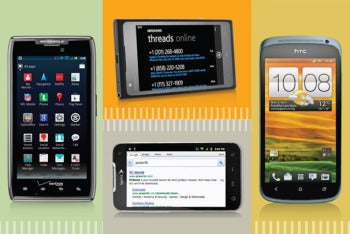
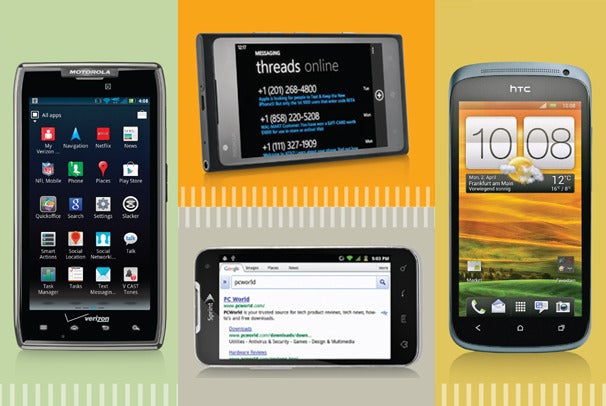
Four of the best smartphones: (left) the Motorola Droid Razr Maxx; (top middle) the Nokia Lumia 900; (bottom middle) the Sprint LG Viper; (right) the T-Mobile HTC One S.Four of the best smartphones: (left) the Motorola Droid Razr Maxx; (top middle) the Nokia Lumia 900; (bottom middle) the Sprint LG Viper; and (right) the T-Mobile HTC One S. Shopping for a new smartphone can be overwhelming.
So many good phones are available that upgrades may feel swamped with op­­tions. Never fear: I’ve picked the best ones on each of the four major carriers. And since the smartphone world moves incredibly fast, I’ll also tell you about phones not yet out.
Worth noting are two upcoming phones I’m excited about but can’t yet recommend, because we don’t know enough about them. One, the Samsung Galaxy S III, will debut in Europe before arriving in the United States. Most carriers likely will get a version of the S III, though so far none of them have confirmed that they will. Another wild card is the fifth-generation iPhone, which hasn’t even been announced yet but is eagerly anticipated.
In the meantime, here are the best smartphones for each of the big four carriers. (Find a summary of this roundup in the chart at the end of this article, on the second page.)

For More Details, Click Hare 
 AT&T
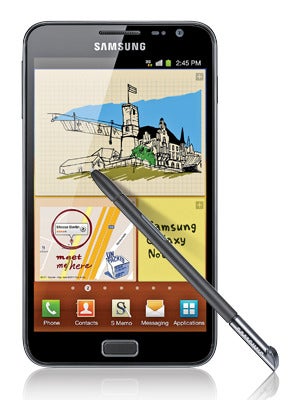
Samsung Galaxy Note
Samsung Galaxy NoteAT&T has a diverse lineup of phones, ranging from Windows Phones like the Nokia Lumia 900 to the iPhone 4S to a slew of powerful 4G LTE Android handsets. One of our favorites is the Samsung Galaxy Note ($300 with a new two-year contract), a one-of-a-kind smartphone that enables you to take notes and draw sketches using a stylus-like Wacom “S Pen.”
As you might expect, the Galaxy Note also has built-in software and special gestures designed for the pen. One handy app, S Memo Lite, lets you jot down notes from pretty much anywhere in the phone. If you have another app open, the notepad appears on top of it, allowing you to switch back to the original app easily. You can open a fuller version of S Memo from the apps menu. In this fuller version, you can add color to your drawing or text, or insert pictures and shapes. In addition, the Wacom pen mimics its nondigital cousins: The harder you press down, the wider your lines will be.
Writing on the Galaxy Note takes some getting used to, but once you master it, you’ll find it’s a lot of fun. The Note can also convert your handwriting into text; it does a pretty good job, though it made a few errors in my testing. Trying the Galaxy Note before you buy it makes sense, however: With its 5.3-inch display, the Note is an unconventional size, bigger than most phones and smaller than most tablets.
Some features of the Samsung Galaxy Note (click to enlarge).(For more on the Note, click on the infographic below.)
Some features of the Samsung Galaxy Note (click to enlarge).Another hot Android phone is the HTC One X ($200 with a new two-year contract). The models in HTC’s One line of phones have three features in common: a high-quality camera with HTC Image­Sense (HTC’s new camera software), built-in Beats Audio for better-sounding music, and a premium design. The premier phone of the One line, the One X has the best specs of the bunch, including a large, 4.7-inch, 1280-by-720-pixel Super LCD 2 display. Super LCD 2 screens, according to HTC, reflect less glare and offer better viewing angles than the displays on older HTC models.
Like all of HTC’s top-of-the-line phones, the One X feels well constructed. The polycarbonate body seems durable but looks attractive. And according to HTC, the One X is scratch-resistant—though we haven’t tested that claim yet.
Unlike the global version of the One X, which shipped with an Nvidia Tegra 3 quad-core chip, the U.S. version has a Qualcomm S4 dual-core processor. (Nvidia’s processor was not yet compatible with LTE networks when the One X was manufactured.) Despite having fewer cores, the U.S. HTC One X sped through all of our testing benchmarks.
(Note: At the moment, a patent dispute may keep the HTC One X from being available to U.S. customers.)
Nokia Lumia 900Nokia Lumia 900If Android isn’t your cup of tea, then consider the Nokia Lumia 900 ($100 with a new two-year contract)—its OS is Windows Phone 7.5. I like the Lumia 900’s unique, stylish design; its stunning display; and its good, 8-megapixel camera. It is also quite speedy, thanks to running on AT&T’s 4G LTE network.
If you can wait to upgrade, consider the Sony Xperia Ion, slated to join AT&T’s LTE lineup later this year (no official date has been an­­nounced). I saw the Ion at its CES 2012 launch, and was impressed by its svelte design and high-end specs. The Ion includes a 4.6-inch display, an HDMI-out port, and a superthin design. It also has a 12-megapixel camera, which took great photos in our brief hands-on tests.

Sprint

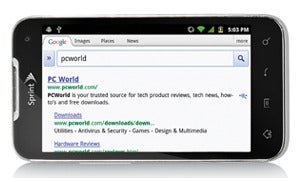
LG ViperLG ViperSprint’s LTE network hasn’t launched yet, but that isn’t stopping the carrier from releasing 4G LTE phones. The first of these, the LG Viper ($100 with a new two-year contract), is an environmentally friendly Android Gingerbread phone with a solid camera and an affordable price.
The phone’s body is 50 percent recycled plastic, according to Sprint. Such Earth-friendly phones aren’t generally stylish, but the Viper is an exception. A chrome border on the phone’s edges nicely complements the piano-black face. The silver plastic backing has a “brushed” finish, giving it a sophisticated look. The Viper feels a little chunkier than other recent smartphones, measuring 4.59 by 2.44 inches and 0.46 inch thick, but it weighs a manageable 5 ounces.
The Viper might be easy on the wallet, but it’s no slouch. Powered by a dual-core 1.2GHz Qualcomm Snapdragon S3 processor, the Viper feels snappy. In our tests, it ran three games—Osmos, Edge, and World of Goo—smoothly and without a glitch. One drawback: The Viper ships with the older Android 2.3 instead of the latest version of the OS, Android 4.0 (also known as Ice Cream Sandwich).
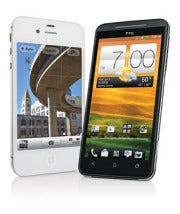
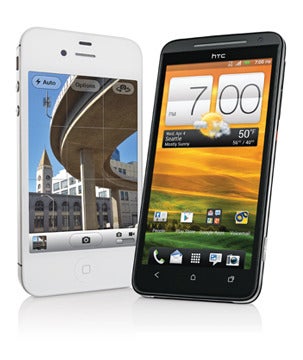
Apple iPhone 4S (left) and HTC Evo 4G LTEYou don’t have to be on Sprint to get the Apple iPhone 4S ($200 with a new two-year contract), as it’s also available on AT&T and Verizon. But iPhone owners on Sprint can take advantage of the carrier’s Un­­limited Data plan, which offers unlimited data and text along with 450 voice minutes, for $70 a month, plus a $10-per-month “premium data add-on charge.”
We love tApple iPhone 4S (left) and HTC Evo 4G LTEhe iPhone 4S’s premium design, upgraded camera, and faster processor. And like its predecessor, the iPhone 4, the 4S has a stunning 3.5-inch, 960-by-640-pixel IPS display. The iPhone 4S also introduced Siri, Apple’s sometimes-helpful virtual assistant.
If you’d prefer to have Sprint’s next great Android phone, look to the HTC Evo 4G LTE, which should be out by the time you read this. (Note: Like the HTC One X, the HTC Evo 4G LTE is in a patent dispute that may make it unavailable for the time being.)
The $199 Evo 4G LTE is essentially a Sprint-branded version of the HTC One X, but it also promises some unique features, such as HD Voice (see below). The Evo 4G LTE carries a dual-core 1.5GHz Qualcomm Snapdragon S4 chip, a 4.7-inch HD IPS display, and the Android 4.0 operating system, along with HTC’s Sense 4.0 user interface and Beats Audio to make music sound better. In addition, like the One X, the Evo 4G LTE has HTC’s ImageSense software for improving and sharing your phone’s photos.
The Evo 4G LTE will be the first phone on a U.S. carrier to come with HD Voice, a technology that significantly decreases background noise. The handset’s built-in kickstand, a design feature we’ve seen on other HTC Evo phones from Sprint, makes watching video on your phone easier. And as the name implies, the Evo 4G LTE will also be on Sprint’s LTE network, once that gets up and running.
Sprint will launch its LTE network initially in Atlanta, Baltimore, Dallas, Houston, Kansas City, and San Antonio starting midyear. The carrier hopes to expand to more cities by the end of the year.

T-Mobile

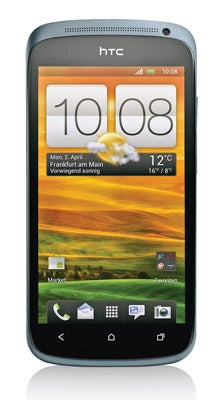
HTC One SHTC One SThe top PHONE on T-Mobile is the HTC One S ($200 with a new two-year contract). It packs a high-end camera, the latest version of Android, and a powerful dual-core processor in a swank, superslim design. HTC phones are generally both easy on the eyes and well constructed, but the One S exceeds those expectations with a classic aluminum unibody design that incorporates contrasting slate and blue-gray panels. However, you can’t remove the battery, and the phone has no MicroSD slot.
The 8-megapixel camera supports an F2.0 aperture and several shooting modes, including high dynamic range (HDR), macro, and panorama. My photos taken in automatic mode looked excellent, with good colors and crisp details. Most of the shooting modes worked quite well, too, especially the macro mode.
The HTC One S is also a superb gaming phone. This handset performed extremely well in PCWorld Labs benchmarks, including GLBenchmark, which measures a device’s graphics performance.
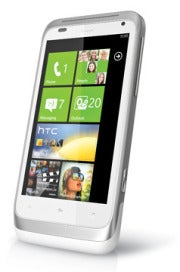
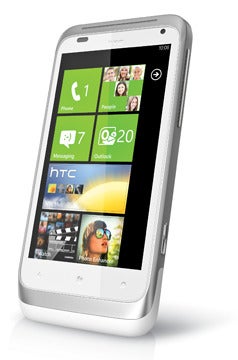
If you’re looking for an alternative to Android, give Windows Phone 7 a try. This OS is on the HTC Radar 4G ($100 with a new two-year contract), which has a stylish and compact unibody aluminum case and a crisp display. The body is almost all white—quite striking against the bold color-block look of Windows Phone.
HTC Radar 4G
HTC Radar 4GThe Radar 4G has the Mango update of Windows Phone 7. An overall success, Mango finally delivers true multitasking with third-party apps, and it has a new browser, Internet Explorer 9. Microsoft completely made over its Bing search engine, too; the new Local Scout feature uses GPS to recognize where you are and provide hyperlocal search results based on your preferences. Mango also includes Xbox Live, the Zune media player, and a full mobile version of Office to create, edit, and view Excel spreadsheets, Word docs, and PowerPoint presentations.
The Radar 4G’s 5-megapixel camera snapped pretty good pictures. The camera has an F2.2 lens and a backside-
illuminated sensor, which helps produce good shots in low-light conditions.
Finally, in a world of dual-core phones, the Radar 4G’s single-core, 1GHz processor may seem a bit dated. But don’t let those specs cloud your judgment: The Qualcomm Snapdragon processor was zippy enough in our testing for browsing the Web, handling multiple open apps, and gaming via Xbox Live.

Verizon

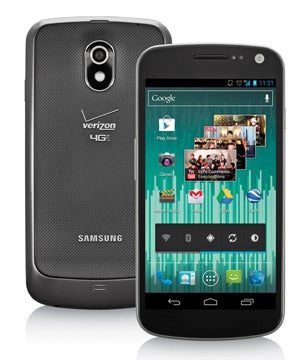
If you’re looking for the pure Android Ice Cream Sandwich experience, you’ll love the Samsung Galaxy Nexus ($300 with a two-year contract), which runs the OS with no interfering overlay. The Galaxy Nexus also features a slick design and a powerful processor.
Samsung Galaxy NexusSamsung Galaxy NexusIts glossy display, piano-black bezel, and textured back are all standard Samsung design elements. But unlike other Samsung Galaxy phones I’ve reviewed, the Nexus feels durable and so­­phisticated. It has no hardware keys on its face. Instead, the touch-sensitive Back, Home, and Search keys are built into the display as soft keys.
Most of the core Android apps have been updated in Ice Cream Sandwich with some sweet new features. For example, Gmail gets a face-lift, with a new context-sensitive Action Bar at the bottom of the screen. The bar changes de­­pending on where in the app you are. When you’re looking at an email message, say, you’ll see options to ar­­chive it, trash it, label it, or mark it as unread. And the browser in Ice Cream Sandwich is just about as close as you can get to a desktop one: You can set it to request full desktop versions of sites instead of the lesser mobile versions. In addition, you can sync your bookmarks from the desktop Chrome browser to the Browser app in Ice Cream Sandwich.
Unfortunately, the Nexus’s camera just isn’t as capable as the rest of the phone. The photos I shot with the Galaxy Nexus’s 5-megapixel camera looked a bit flat. Colors seemed a touch washed out, and details were a little fuzzy. But even if your photos don’t come out perfect, you may be able to salvage them with the OS’s suite of photo-editing tools. You can apply an array of filters (similar to those in Instagram), adjust the image angle, remove red-eye, crop, and more. Any edits you make to a photo will create a copy, in case you want to revert to the original.
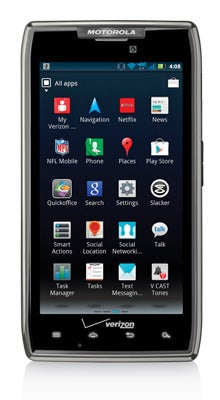
Motorola Droid Razr Maxx
Motorola Droid Razr MaxxIf you’re tired of carrying a phone charger everywhere, check out the Motorola Droid Razr Maxx ($300 with a two-year contract). Practically identical to the Droid Razr, also on Verizon, the Razr Maxx offers one huge improvement: longer battery life. The original Razr’s battery seemed to drain before your eyes, a common problem among the carrier’s 4G phones. In PCWorld Labs battery-life tests, the Droid Razr ran for 6 hours, 49 minutes when connected to the Web via Wi-Fi. The Droid Razr Maxx, on the other hand, lasted 12 hours, 29 minutes—almost double the life!
Besides its insane battery life, the Droid Razr Maxx has a lot going for it. At 0.35 inches thick, the Razr Maxx is incredibly thin—on a par with the Samsung Galaxy Nexus. It has a soft-touch back made out of Kevlar, a ma­­terial found in high-end speedboats, bulletproof jackets, and bicycle tires; Motorola says that Kevlar is five times stronger than steel. The phone also has a stainless-steel core, giving it a feeling of sturdiness and solidity. On top of that, a splash-guard feature protects the phone if you get caught in a downpour or spill something on it.
The Droid Razr Maxx comes with a service called MotoCast, which lets you access files on your PC remotely without having to upload or sync them. You can access everything from PowerPoint files to your iTunes playlists on your Razr Maxx. In addition, Smart Actions, a new app, lets you set reminders to indicate when you should recharge your phone (for example, when you go to bed). If you forget to plug your phone in, you can set a Smart Action called “Nighttime Battery Saver,” which adjusts your phone’s network and screen settings to make the battery last longer the next day.

The Prepaid Alternative

Don’t want to commit to a two-year contract? Go prepaid. Contract-free carriers now have better phones and faster networks than ever before. Some of these carriers, such as MetroPCS, even have 4G LTE networks. We gave both of MetroPCS’s new phones, the Samsung Galaxy Attain and the LG Connect 4G, positive reviews.
One drawback of going contract-free: You may not get the latest smartphones. For instance, Straight Talk, a prepaid service sold at Walmart, sells the LG Optimus Black and the LG Optimus 2X. They debuted at CES (the Consumer Electronics Show)—in January 2011.

Summary: The Best Smartphones Chart

Click on the chart below to enlarge it.