Recent Posts

Showing posts with label Laptop. Show all posts

Tuesday, June 26, 2012

Smartphones and Laptops: New Ways to Pair Them!!

Smartphones and Laptops: New Ways to Pair ThemEach new gadget brings speculation about what older device it will replace--full-featured laptops supplant desktops, while ever-smarter phones relieve you from carrying a laptop on occasion. But don't overlook the partnerships that can result. Soon, for instance, you’ll be able to use an Ultrabook to charge your phone wirelessly, or you'll be able to transfer files by tapping your smartphone to a laptop lid.
Today, most people connect their smartphones and laptops only occasionally--for transferring a photo, say, or by tethering the phone for Internet access on the laptop. We tend to use these two mobile devices separately, because we've never had a perfect, seamless way to keep the devices connected and in sync. With rapidly developing mobile technologies, though, we’re getting closer. Here’s a look at the burgeoning simpatico relationship between smartphones and laptops.

Apps for Continual Connectivity and PC Control

Smartphones and Laptops: New Ways to Pair Them

Intel's Pair & Share sends images from a mobile device to a PC or TV.
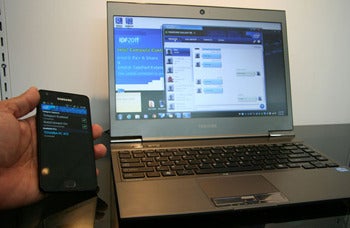
Intel announced last year apps that make connecting smartphones and Windows PCs easier. For example, the Pair & Share app quickly sends photos from your Android phone, iPhone, or tablet to your computer screen or TV, and the TelePort Extender app puts the phone’s texting and caller information on the computer.
The free apps are available for download now, but Intel promises even more interaction between mobile devices and laptops--particularly with the new class of Ultrabook laptops.
Smartphones and Laptops: New Ways to Pair Them

TelePort Extender shows phone information on a PC screen.
As part of its mission to position Ultrabooks as "the pinnacle of mobile computing devices," the chip maker is working with PC manufacturers to add innovative technologies to the laptops. Aside from touch interfaces and voice and gesture recognition, Intel’s plans include more applications for “using smartphones to interact with and control an Ultrabook or desktop PC,” according to a recent Intel statement.
This means that in addition to transferring data, smartphones will be able to manipulate your laptop--remotely controlling the PC, perhaps in ways we haven’t seen yet. Instead of needing several desktop-mobile connectivity apps (such as a remote desktop tool, a remote control for presentations, a media controller, contact-syncing utilities, and multimedia-syncing apps), we could have one seamless approach.

Wireless Smartphone Charging

The interaction will go both ways: A laptop may manipulate or control a smartphone, too. Intel demonstrated a wireless phone-charging feature for Ultrabooks at the Computex trade show this year. Inside the Ultrabook is a slim transmitter; on the phone is a receiver. You just place the phone next to the Ultrabook to charge the handset--no need to carry around a phone charger or to remember to pack a USB cable.
TransferJet technology offers similar wireless charging capabilities, plus the ability to transfer data at a fast maximum rate of 560 mbps. Although we haven’t seen many TransferJet devices since Sony developed the technology and showed it off in 2008, inductive charging and cable-free file transfer certainly could become killer features for your laptop and smartphone, especially for frequent travelers.

Tap to Connect

Smartphones and Laptops: New Ways to Pair ThemOther technologies being built into laptops and smartphones allow the devices to share tasks without making physical contact. One expands the near-field communication short-range wireless protocol, now used mostly for mobile payments systems such as Google Wallet’s “tap-and-pay” system. MasterCard, meanwhile, is incorporating its PayPass technology into Ultrabooks so that you can wave your smartphone at your laptop to make online purchases more securely.
NFC may have other handy uses, such as enabling wireless information sharing between devices. With an NFC-enabled phone and laptop, you may be able to send a contact card, website address, videos, or other information from your phone to your PC without needing to install additional apps or wire the devices together. NFC-enabled phones could also allow you to verify your security information on websites or your laptop. In the future, NFC may support quicker Bluetooth pairing between your phone and laptop. The Hewlett-Packard Envy 14 Spectre is one of the first Ultrabooks to have built-in NFC support.

The Future Is Connected

All of our devices are becoming smarter and more connected. In the years to come, using your smartphone and laptop--as well as your TV, tablet, and other connected devices--together will be simpler. Start playing a game on your laptop, and finish it on your phone. Stream anything from your smartphone to your laptop, or vice versa. Seamlessly access all your information on any device. We’ve seen hints and examples of such capabilities already, but that’s just scratching the surface of what’s starting to be possible.

Sunday, June 17, 2012

Rare Working Apple-1 Computer Sells for Record $374,500!!

A 36-year-old Apple-1 personal computer, one of just six thought to be in working condition, sold for a record $374,500 at a New York auction.
Also sold by Sotheby's Friday: A memo written by former Apple CEO Steve Jobs during his time at video game maker Atari.
It may not look like much, but this 1976 Apple-1 computers -- a circuit board -- just sold for $374,500, a record, at a Sotheby's auction. (Image: Sotheby's.)
The gavel price for the Apple 1, which included the buyer's premium -- the commission owed to auctioneer Sotheby's -- was nearly twice the top estimate of $180,000 and triple the low-ball prediction of $120,000. (See also "Recreating the Apple-1").
It was a record for an Apple-1, the first computer from the company co-founded by Steve Jobs and Steve Wozniak. The previous record of $213,000 was set in late 2010 at an auction conducted by Christie's in London.
Friday's price was 76 percent higher than the 2010 Apple-1 sale.
Sotheby's did not reveal the name of the buyer of either the Apple 1 or the memo, and did not reply to questions Friday. The BBC, however, reported that a telephone bidder won the auction for the Apple 1.
The Apple-1, a circuit board hand-built by Apple co-founder Steve Wozniak, was made in 1976, and sold at the time for $666.66. About 200 units were produced, but by Sotheby's estimate, only 50 survive. Six, including the one sold Friday, are known to be in working condition. (See also "The Most Collectible PCs of All Time.")
Included with the Apple 1 lot was an original cassette interface -- cassette tapes were used to store programs and data -- and several manuals, including a rare BASIC user's manual.
The four-page Jobs-authored memo sold for $27,500, also significantly higher than the auction house's preliminary estimate of $10,000 to $15,000.
Steve JobsThat memorandum and an accompanying one-page addendum were written by Jobs in 1974 during a short stint with game-maker Atari, and included his suggestions for improvements on World Cup, a coin arcade game of the time. The lot featured three original circuit diagrams drawn by Jobs in pencil and the one-page hand-written addendum.
Although both the Apple 1 and the memo sold for well above their estimates, neither came close to the $1.6 million paid by a Miami executive last year for the original contract that marked Apple's founding. Jobs, who died in October 2011, Wozniak and the lesser-known Ron Wayne drew up the contract in April 1976.
Sotheby's also handled the sale of the Apple contract.
It may not look like much, but this 1976 Apple-1 computers -- a circuit board -- just sold for $374,500, a record, at a Sotheby's auction. (Image: Sotheby's.)
Gregg Keizer covers Microsoft, security issues, Apple, Web browsers and general technology breaking news for Computerworld. 

Thursday, May 17, 2012

Ultrabook Laptops : Not Just MacBook Air Clones !!

Why Ultrabooks Aren't Just MacBook Air Clones
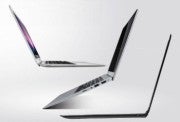
Ultrabooks are sleek, super-thin laptops that often feature a silver, wedge or tapering design--yes, just like the Apple MacBook Air.
However, despite Ultrabooks’ design similarities with Apple’s popular ultraportable, Ultrabooks really are a unique new breed of Windows laptops. They offer a distinct combination of performance, good looks, and features--some not available on the MacBook Air. Let's take a look.

Ultrathin and Premium: The Laptop's Natural Evolution

Apple Macbook Air
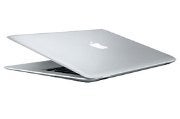
Apple Macbook AirWith the MacBook Air, Apple definitely popularized the metallic, razor-thin design we now see in Ultrabooks, but the Air’s signature silver body, black chiclet keyboard, and tapering wedge shape isn’t exclusive to Apple.
As HP design exec Stacy Wolff told Engadget, sometimes silver is the right choice, and Apple doesn’t “own silver.” Speaking about the design similarities between the new HP Envy Spectre XT Ultrabook and the MacBook Air, Wolff proclaimed that the similarities have nothing to do with mimicking Apple--they’re just the way that technology has developed.
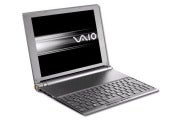
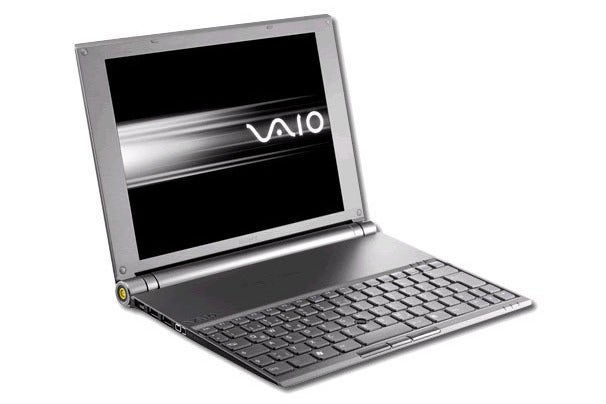
The 2003 Sony Vaio X505The 2003 Sony Vaio X505The history of laptops shrinking in size suggests this is true. In fact, in 2003--five years before Apple introduced the MacBook Air--Sony introduced another premium, super-thin laptop: The Vaio X505 (also known as the Vaio PCG-X505, or the "505 Extreme"). This 1.8-pound laptop tapered down to 0.4 inches at the front (thinner than the Air) and had the sleek metallic body found on Ultrabooks today.
Look a little closer at some Ultrabooks that may look like MacBook Air clones, and you’ll find that laptop makers have added their own touches or improvements to the design. The Envy Spectre XT, for example, has a magnesium body with a brushed design and a rubber coating on the bottom of the laptop; Apple uses aluminum with no pattern or bottom coating.
LG P430
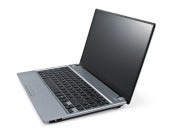
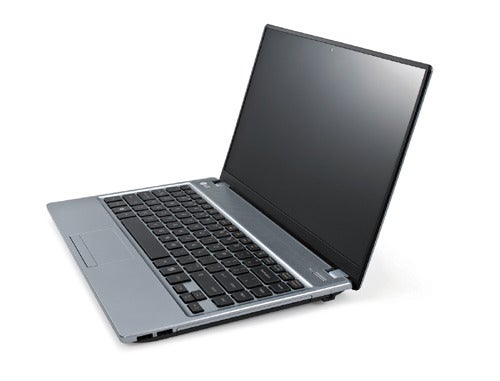
LG P430The LG P430 has a brushed aluminum shell and black chiclet keyboard, but LG uses a thin bezel to cram a 14-inch (on the diagonal) display into the P430’s 13.3-inch footprint.
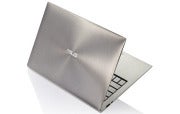
Asus Zenbook UX21Asus Zenbook UX21The Asus Zenbook UX21 and UX31 also have an identical shape as the MacBook Air, but these Ultrabooks feature subtle, yet eye-catching design differences: A circular spun-metal pattern on the charcoal gray lid and a slightly contrasting linear brushed pattern on the laptops’ silver deck and bottom. Metal keys, a glass-coated touchpad, and sharper corners are other distinctions on the UX21 and UX31.

Unique Ultrabook Features and Options

Good looks aren’t everything, however. Even though some laptops do look exactly like the MacBook Air, often there are significant differences inside. Besides running Windows, using Intel processors, and meeting the thinness requirement, laptop makers are free to adapt Intel’s specifications for Ultrabooks as they see fit.
Some Ultrabooks push the dimensions of Ultrabooks with larger displays: Examples are the 15.6-inch Acer Timeline M3 and the 14-inch Samsung Series 5 Ultra. (The latter even packs an optical drive.) And Ultrabooks, like the Asus Zenbooks, are coming soon with full HD 1080p resolution on matte In-Plane Switching (IPS) displays, for wider viewing angles and richer color.
Toshiba Portege Z835 portsToshiba Portege Z835 portsUltrabooks tend to offer more ports that are standard than the MacBook Air does. Both the Toshiba Portege Z835 and the HP Folio 13, for example, come with gigabit ethernet, HDMI, and USB 3.0. The Portege Z835 also adds VGA. You’d need to buy adapters if you want ethernet, VGA, or HDMI capability on the MacBook Air.
Options in some Ultrabooks for hybrid HDD and SSD drives (rather than just solid-state drives) help drive down the prices of these laptops. The hybrid drives also increase storage capacity in exchange for a bit of a performance hit.
Want more powerful graphics processing than the integrated graphics that come in most Ultrabooks? The Acer Timeline M3 and the Gigabyte U2442 series both offer, as options, discrete Nvidia graphics cards.
Finally, some Ultrabooks that should be coming by the end of this year are expected to feature touchscreens and voice recognition.
In short, rather than just aping Apple, many Ultrabook makers are taking that wafer-thin design idea and veering off in their own directions. Such diversifying may muddy the Ultrabook brand, but this competition and PC makers’ quest to make Ultrabooks of their very own also means that we’ve got many more choices--and perhaps a better chance of finding the good-looking, super-thin laptop that meets our needs precisely.

Tuesday, May 15, 2012

Thinnest 4G Ultrabook in The World: Lenovo!!

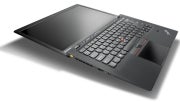
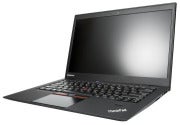
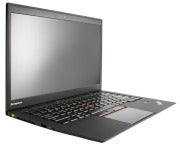
Lenovo on Tuesday announced a range of new ThinkPads with Intel's latest third-generation Core processors, including a ThinkPad ultrabook that the company claims is the "thinnest ultrabook in the world."
The ThinkPad X1 Carbon ultrabook has a 14-inch screen, weighs under 1.8 kilograms and is 18.8-mm thick. It will have the latest Intel ultrabook processors, code-named Ivy Bridge, which are expected to be officially announced next month.
Lenovo also updated the popular ThinkPad T-series and X-series lineups, making them faster while adding more battery life to the models. The company also has new connectivity and multimedia capabilities that could be helpful for business users. The laptops will be available on June 5.
For the first time 4G mobile broadband connectivity has been added across ThinkPads, including the new X1 Carbon ultrabook, said Dilip Bhatia, vice president and general manager of the ThinkPad business unit. The service will initially be available in the U.S. and some other countries for US$1.99 for 30 minutes. Lenovo is partnering with telecom carriers worldwide to make the service available to ThinkPad customers.
The company did not share pricing for X1 Carbon, but said the system will become available in the coming months. The ultrabook's pricing could be in the ballpark of the company's existing ThinkPad T430U ultrabook, which starts at $849, Bhatia said.
The X1 Carbon ultrabook will be part of the existing line of thin-and-light ThinkPad X1 laptops. Many top PC makers are releasing ultrabooks. Last week Hewlett-Packard announced the Envy Ultrabook for consumers (starting at $749) and EliteBook Folio 9470M ultrabook for businesses ($1,149). Dell and Acer are expected to start selling ultrabooks in the coming months.
The ultrabook and new laptops will also have improved voice-conferencing capabilities, with dual-microphone and web cameras that can track a moving face. Also included are noise cancellation capabilities, which could be helpful in removing keyboard typing sound while in videoconference, Bhatia said.
The new ultraportable ThinkPad X230 model has a 12-inch screen and is available with an optional slice battery -- a flat, extended battery that can be attached under the laptop -- that could give the laptop 24 hours of battery life. The laptop is less than three pounds with a six-cell battery. The new X230T model is just like the X230, but includes a touchscreen, giving it the flexibility of a tablet computer, Lenovo said. The X230 starts at $1,179, while the X230T starts at $1,479.
Lenovo has also updated the popular T-series lineup with the ThinkPad T430, T430s and T530 models. The laptops will have optional high-definition displays and offer 30 hours of battery life with an optional slice. The laptops will come with either with 14-inch and 15-inch screens, and the T430 starts at $879, the T430S at $1,399. Lenovo did not immediately provide a price for the T530.
In addition to offering new chips, the mainstream ThinkPad L430 and L530 laptops -- both starting at $879 -- are thinner, and available with either 14-inch or 15-inch screens.
Lenovo is also introducing a docking station that will have five USB 3.0 ports, always-on mobile charging and multiple video-out ports. The price for the docking station was not immediately available.
Wednesday, May 9, 2012

New Stylish HP Ultrabooks and a Wafer-Thin 'Sleekbook'

HP announced a slew of refreshed and new HP laptops on Tuesday that should be shipping to retailers this summer. Among the newcomers are several HP Envy models and a business-oriented Ultrabook.

Premium Ultrabook: HP Envy Spectre XT

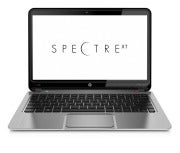
HP Envy Spectre XTHP Envy Spectre XTHP offers the new Envy Spectre XT as an "ultra-stylish" extension of the HP Spectre line, which already looks pretty sleek thanks to its glass top. The XT will have an all-metal chassis (like similar premium Ultrabooks) and a slim bezel (like the Envy 14 Spectre) to pack a larger display in its small 13.3-inch footprint.
The XT is thinner and lighter than the Envy 14 Spectre: It measures 0.57 inch thick and weighs 3.07 pounds, whereas the Envy 14 Spectre comes in at 0.9 inch thick and 4 pounds. A backlit keyboard, a 128GB solid-state drive, and a battery-life rating of 7 hours round out this premium Ultrabook's features.
The Envy Spectre XT's starting price is $1000, and you can configure one complete with Intel Ivy Bridge processors starting on June 3.

HP Envy Ultrabooks: 14-Inch and 15.6-Inch Screens

HP Envy UltrabookHP Envy UltrabookHP will also expand its Ultrabook range with new large-screen Ultrabooks, starting at $750 for the 14-inch Ultrabook and $800 for the 15.6-inch model. These two Ultrabooks are likely the HP Envy 4 and Envy 6, about which certain details leaked in mid-April.
The Envy Ultrabooks promise long battery life (8 to 9 hours), impressive sound with Beats Audio, and fast mSATA solid-state drives. If you don't want your Ultrabook to look like the multitude of silver models now available, you'll be able to opt for a red-trimmed black version. The Ultrabooks are available starting on May 9.

New Ultrathin: HP Envy Sleekbook

HP Envy SleekbookNot enough Envy laptops to choose from? You'll also find a new thin laptop that HP has dubbed the Sleekbook. With a thickness of 0.8 inch and a weight of less than 4 pounds, this laptop could easily qualify as another Envy Ultrabook. But the Sleekbook does have a unique configuration of options and features, including optional discrete AMD graphics and a choice of black or red for the slip-resistant base. According to HP, the Sleekbook starts at $600 for the 15.6-inch model (available on June 20) and $700 for the 14-incher (available on May 9). The counterintuitive difference in prices reflects the fact that the laptop with the larger screen is configured with an AMD processor, while the one with the smaller screen has an Intel CPU.

Business Ultrabook: HP EliteBook Folio 9470m

HP Pavilion g6 laptopThe HP EliteBook Folio 9470m is an enterprise-class Ultrabook. Larger than HP's other business Ultrabook, the Folio 13, the EliteBook Folio has a 14-inch display but still manages to keep its weight and thickness down to 3.5 pounds and 0.75 inch. Among its business-friendly features are a full array of ports (including ethernet and VGA), an optional secondary six-cell slice battery, and a Trusted Platform Module (TPM) security chip for data protection. You'll have to wait until October for this new business Ultrabook, however, and pricing is not yet available for it.
In addition to launching those laptops, HP will update several other models to give them Ivy Bridge support and more configuration options.
HP Pavilion g6 laptopFor instance, HP's Pavilion dv4, dv6, dv7, g6, and g7 laptops will be available in more colors starting in late June or July. Two new business laptops, the EliteBook 2170p and the EliteBook 2570p, will update the EliteBook line, starting on June 4.
We knew that a torrent of new Ultrabooks and Ivy Bridge-refreshed laptops would be coming this year. The flood is definitely starting!

Saturday, April 21, 2012

Windows 8 Touchscreen Laptops's Out Look

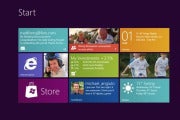
What Will Windows 8 Touchscreen Laptops Look Like?Windows 8’s touch-centric interface will help to usher in a new wave of laptops with tabletlike touchscreens. To make it easier for users to tap and swipe on even superthin Ultrabooks, laptop makers will break out of the traditional clamshell shape and introduce laptops with more unusual designs.
What will these new Windows 8 hybrid laptops look like? The new operating system will make rotating, sliding, and flipping possible on Windows laptops. Here are a few examples of existing hardware designs that offer a taste of what a laptop with Windows 8 capabilities could do.

Going Beyond the Clamshell

Although laptop manufacturers could simply add a touchscreen to a laptop without changing the traditional clamshell shape, that could pose a few problems, especially in the case of the new category of superthin Windows laptops, Ultrabooks.
When trying to interact with the thin touchscreen panel on an Ultrabook, you could easily end up pushing the screen down. And according to DigiTimes, laptop manufacturers can’t just strengthen the hinge to compensate, because that could cause the bottom of the lightweight laptop to flip up when you press the screen. Aside from the physics problem, reaching over the keyboard for extended periods of time with the screen at an angle might not be ideal for users from a usability or ergonomics standpoint.
Thankfully, we’ve seen many innovative laptop designs that manufacturers could adopt successfully for Windows 8.

Convertible Tablet Design

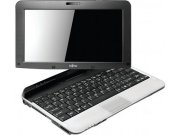
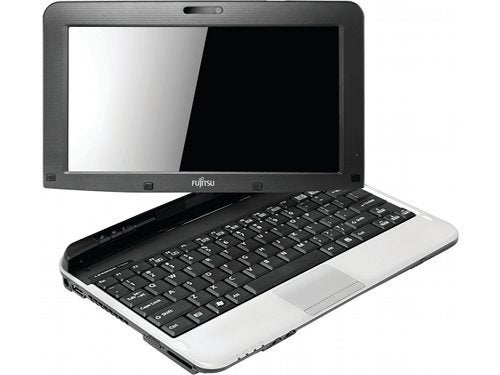
Fujitsu Lifebook T580Convertible tablet PCs, such as the Fujitsu Lifebook T580, have screens that rotate 180 degrees and fold flat to work in tablet mode. Since their introduction about a decade ago, convertible tablet PCs have never really taken off outside of niche business and student circles, owing to their bulky size and high cost.
Fujitsu Lifebook T580
Windows 8 convertible PCs, however, will likely be not only much sleeker but also much more budget-friendly than previous tablet PCs--ditching optical drives and arcane, expensive pen-optimized displays. Relatively thin Ultrabooks with rotating touchscreens could take advantage of the finger-friendly Windows Metro interface like a slate, but then could transform back into laptop mode.

Fold-Over Design

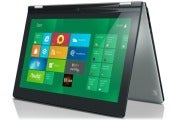
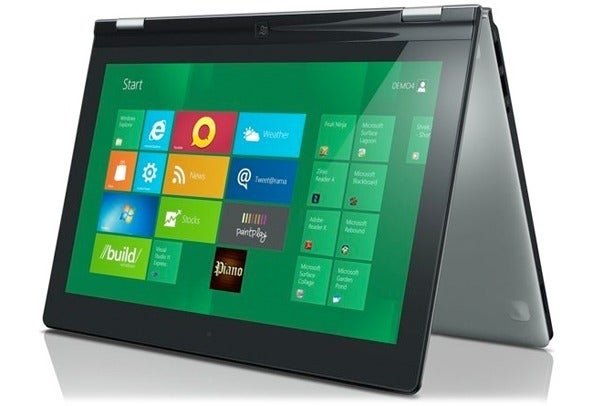
Lenovo IdeaPad Yoga Lenovo IdeaPad Yoga The Lenovo IdeaPad Yoga presents another possible design solution. This 0.67-inch-thick Ultrabook, not yet available, flips back 360 degrees on a pair of double hinges. Propped up on a table like a tent, the Yoga will resist toppling over when you use touch apps, and it will offer an ideal viewing and tapping angle. The Yoga can also flip into other positions.
The Yoga’s fold-over design is a newer concept than the convertible/rotating screen. How the fold-over design actually feels and works remains to be seen; the Yoga is expected to be released later this year. Still, it’s an innovative and viable option that other laptop makers could adopt.

Sliding Screen Design

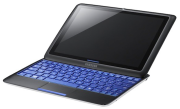
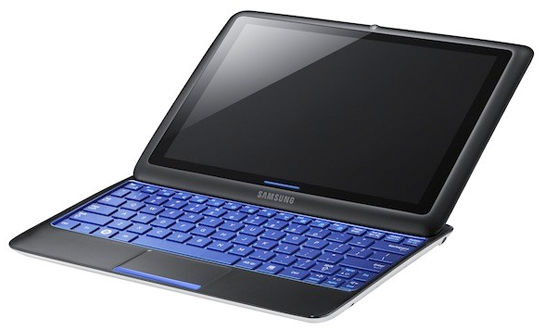
Samsung TX100Laptops may also take design inspiration from smartphones, with keyboards that slide out from underneath the touchscreen.
Samsung TX100One example of a model with a sliding screen was the Samsung TX100, which debuted at CES 2011. This slim tablet PC was reminiscent of the MacBook Air but had a keyboard that slid out from beneath its screen just as the original Android G1 smartphone keyboard did. After its introduction at CES, the TX100 was due to go on sale in spring 2011--in Europe, at least. However, that never happened.
Another example of a sliding design is the Asus Eee Pad Slider, even though it’s an Android tablet rather than a laptop. PCWorld’s review of the 10-inch Eee Pad Slider found the design to be effective, with the display sufficiently tilted and sturdy for touch navigation.

Docking Station Design

Perhaps the most versatile option is the docking station design, in which tablets slide into a docking station (or connect to one wirelessly) to create a hybrid laptop of sorts.
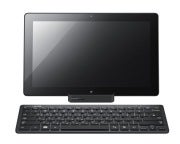
Samsung Series 7 tabletAndroid tablets--in particular, the Asus Transformer Prime and the more recent Lenovo IdeaTab K2--lead the way here. While those devices are technically tablets that connect to docking stations to become more laptoplike, you can find Windows tablets with laptoplike specs and docking stations.
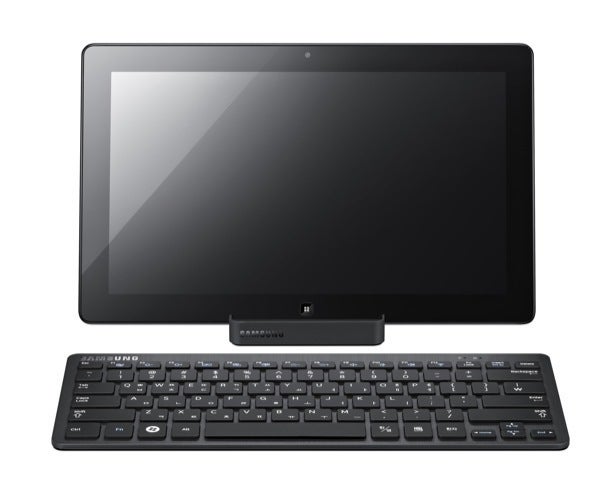
Samsung Series 7 tabletFor example, the Samsung Series 7 tablet boasts the same hardware specs as Samsung's Series 7 laptops, but in a thin and small tablet form. The Windows 7 slate comes with an Intel Core i3 or i5 processor, a solid-state drive, and 4GB of RAM. The docking station extends the tablet’s capabilities with a wireless keyboard and more ports for full laptoplike functionality. A Windows 8 version is in the works.
Windows 8 laptop manufacturers considering incorporating touchscreens could perhaps go this route, offering the best of both worlds by making tablets as powerful as laptops with keyboard docking stations. After all, Microsoft wants Windows 8 to be the “everywhere operating system” for all devices--good on tablets, laptops, smartphones, and everything else, whatever shape or form they come in.

Friday, April 13, 2012

75 Ultrabook Designs on the Way, Prices Maybe to Reach $699

75 Ultrabook Designs on the Way, Prices to Reach $699Intel said on Wednesday that 75 Ultrabook models are already in development and will include new form factors such as hybrids that can switch from laptops to touchscreen tablets.
The chip maker also expects Ultrabooks will reach a starting price of $699 within several months by the back-to-school period this year, as the company works to boost retail visibility of the Ultrabook form factor through a new marketing campaign. Currently Ultrabooks are priced from about $800 upwards.
Intel announced the Ultrabook concept last May, aiming to create new laptops that are not only thin and light, but also feature long battery life and quick turn-on times on par with tablets. To support the development, Intel has invested $300 million in companies that develop new technologies for Ultrabooks.
Since the announcement, 21 Ultrabook devices have hit the market, but more are on the way, said Kirk Skaugen, Intel general manager for the PC Client group. Newer Ultrabooks will come with several new features including touchscreens for Windows 8 and hybrid designs, he added.
75 Ultrabook Designs on the Way, Prices to Reach $699"I think we can deliver the best of a tablet, and the best in what (users) know in a notebook," Skaugen told reporters.
Earlier this year at the Consumer Electronics Show, Lenovo unveiled an Ultrabook device called the IdeaPad Yoga, which has a touchscreen display that can flip into a tablet. The device runs Windows 8, which Microsoft will release later this year.
To highlight Ultrabooks, Intel has launched a "multi-hundred million dollar" advertising campaign for the devices, which will lead to new TV and Internet advertisements, Skaugen said.
As part of the campaign, Intel will also create "Ultrabook experience zones" in retail stores, to better set apart the devices from traditional laptops. "In order to be compliant to that section, you have to meet a series of tests that Intel is putting in the market place," he said. These tests require devices to meet set requirements, including how thin the device is and how fast it accesses data.
"Intel plans to ensure Ultrabooks have a consistent experience. And if it's too thick it won't be called an Ultrabook," Skaugen said. "It won't be allowed to be called an Ultrabook because Ultrabook is a trademark of Intel and we can protect the trademark."

For More Info: Click Hare