Recent Posts

Showing posts with label Mac. Show all posts

Thursday, November 22, 2012

Thanksgiving Discount Offers Of Softwares: Hurry Up!!!

Nov. 16, 2012 2012 Happy Thanksgiving Started. In order to celebrate the Thanksgiving with you, Brorsoft is now offering you a special Thanksgiving feast- series of Thanksgiving Big Sales of our HOT products to thanks for you continued support. Brorsoft hopes this can add something exciting to the merry holiday, and certainly it will.

This upto 35% off Discount Code is being available from Nov. 16, 2012 to Dec. 7, 2012. Before Dec. 7, 2012, everyone can enjoy the up to 35% off special offer of our powerful DVD/BD/Video Converters. This big promotion covers our 6 hot products. Here we list the discounted products as below.


DVD Ripper $10 Price-off
Price: $35
Now: $24.9 save more than $10


DVD Ripper for Mac $10 Price-off
Price: $35
Now: $24.9 save more than $10


Blu-ray Ripper 30% off
Price: $49
Now: $34.3 save nearly $15


Blu-ray Ripper for Mac 30% off
Price: $49
Now: $34.3 save nearly $15


MKV Converter 35% off
Price: $29
Now: $18.85 save more than $10


MKV Converter for Mac 35% off
Price: $29
Now: $18.85 save more than $10


What’s more, on the special day, we are glade to offer you a nearly free upgrade- you only need pay an extra $6, can easily upgrade your software to the all-one-in video format converting program: Video Converter or Video Converter for Mac if you like. The only prerequisite is that you have got our product MTS/M2TS Converter, MTS/M2TS Converter for Mac, MXF Converter or MXF Converter for Mac.


If you have intention, please contact support@brorsoft.com or Brorsoft Facebook and leave your order number or email address when you made the purchase to get the further deal and help.

Thursday, May 17, 2012

Ultrabook Laptops : Not Just MacBook Air Clones !!

Why Ultrabooks Aren't Just MacBook Air Clones
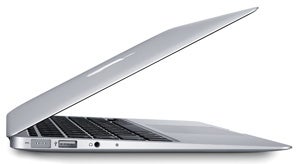
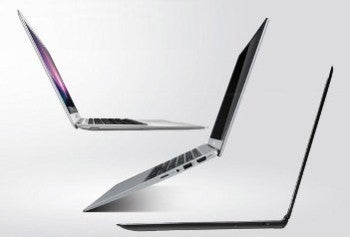
Ultrabooks are sleek, super-thin laptops that often feature a silver, wedge or tapering design--yes, just like the Apple MacBook Air.
However, despite Ultrabooks’ design similarities with Apple’s popular ultraportable, Ultrabooks really are a unique new breed of Windows laptops. They offer a distinct combination of performance, good looks, and features--some not available on the MacBook Air. Let's take a look.

Ultrathin and Premium: The Laptop's Natural Evolution

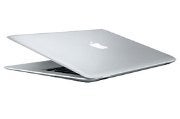
Apple Macbook Air
Apple Macbook AirWith the MacBook Air, Apple definitely popularized the metallic, razor-thin design we now see in Ultrabooks, but the Air’s signature silver body, black chiclet keyboard, and tapering wedge shape isn’t exclusive to Apple.
As HP design exec Stacy Wolff told Engadget, sometimes silver is the right choice, and Apple doesn’t “own silver.” Speaking about the design similarities between the new HP Envy Spectre XT Ultrabook and the MacBook Air, Wolff proclaimed that the similarities have nothing to do with mimicking Apple--they’re just the way that technology has developed.
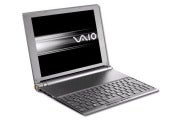
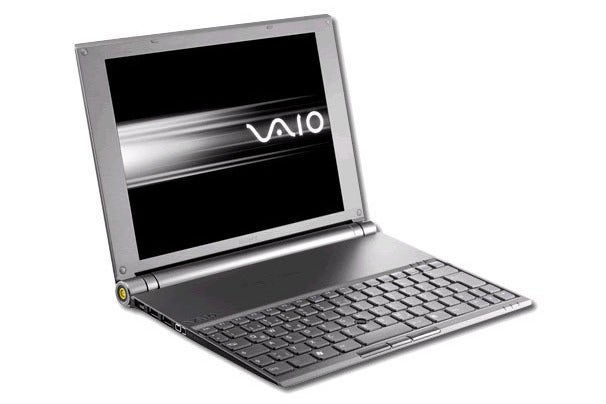
The 2003 Sony Vaio X505The 2003 Sony Vaio X505The history of laptops shrinking in size suggests this is true. In fact, in 2003--five years before Apple introduced the MacBook Air--Sony introduced another premium, super-thin laptop: The Vaio X505 (also known as the Vaio PCG-X505, or the "505 Extreme"). This 1.8-pound laptop tapered down to 0.4 inches at the front (thinner than the Air) and had the sleek metallic body found on Ultrabooks today.
Look a little closer at some Ultrabooks that may look like MacBook Air clones, and you’ll find that laptop makers have added their own touches or improvements to the design. The Envy Spectre XT, for example, has a magnesium body with a brushed design and a rubber coating on the bottom of the laptop; Apple uses aluminum with no pattern or bottom coating.
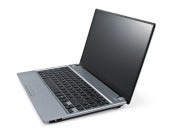
LG P430
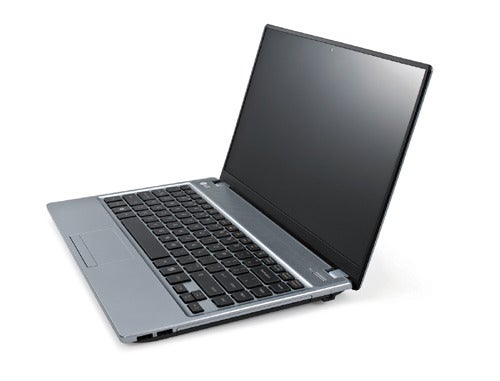
LG P430The LG P430 has a brushed aluminum shell and black chiclet keyboard, but LG uses a thin bezel to cram a 14-inch (on the diagonal) display into the P430’s 13.3-inch footprint.
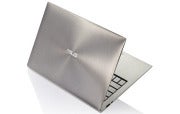
Asus Zenbook UX21Asus Zenbook UX21The Asus Zenbook UX21 and UX31 also have an identical shape as the MacBook Air, but these Ultrabooks feature subtle, yet eye-catching design differences: A circular spun-metal pattern on the charcoal gray lid and a slightly contrasting linear brushed pattern on the laptops’ silver deck and bottom. Metal keys, a glass-coated touchpad, and sharper corners are other distinctions on the UX21 and UX31.

Unique Ultrabook Features and Options

Good looks aren’t everything, however. Even though some laptops do look exactly like the MacBook Air, often there are significant differences inside. Besides running Windows, using Intel processors, and meeting the thinness requirement, laptop makers are free to adapt Intel’s specifications for Ultrabooks as they see fit.
Some Ultrabooks push the dimensions of Ultrabooks with larger displays: Examples are the 15.6-inch Acer Timeline M3 and the 14-inch Samsung Series 5 Ultra. (The latter even packs an optical drive.) And Ultrabooks, like the Asus Zenbooks, are coming soon with full HD 1080p resolution on matte In-Plane Switching (IPS) displays, for wider viewing angles and richer color.
Toshiba Portege Z835 portsToshiba Portege Z835 portsUltrabooks tend to offer more ports that are standard than the MacBook Air does. Both the Toshiba Portege Z835 and the HP Folio 13, for example, come with gigabit ethernet, HDMI, and USB 3.0. The Portege Z835 also adds VGA. You’d need to buy adapters if you want ethernet, VGA, or HDMI capability on the MacBook Air.
Options in some Ultrabooks for hybrid HDD and SSD drives (rather than just solid-state drives) help drive down the prices of these laptops. The hybrid drives also increase storage capacity in exchange for a bit of a performance hit.
Want more powerful graphics processing than the integrated graphics that come in most Ultrabooks? The Acer Timeline M3 and the Gigabyte U2442 series both offer, as options, discrete Nvidia graphics cards.
Finally, some Ultrabooks that should be coming by the end of this year are expected to feature touchscreens and voice recognition.
In short, rather than just aping Apple, many Ultrabook makers are taking that wafer-thin design idea and veering off in their own directions. Such diversifying may muddy the Ultrabook brand, but this competition and PC makers’ quest to make Ultrabooks of their very own also means that we’ve got many more choices--and perhaps a better chance of finding the good-looking, super-thin laptop that meets our needs precisely.

Thursday, May 10, 2012

4G iPhone 5 Will Be Immediate Hit, ITnewsTouch Survey!!

If the results of a new ITnewsTouch/Macworld survey are any guide, the forthcoming iPhone 5 with LTE is going to be a big hit.
Large numbers of people plan to buy or upgrade to the first 4G iPhone, many of them citing the new LTE wireless technology as a main reason, the survey suggests.
Of the Macworld readers asked, 70 percent say they will buy the new device, with 48 percent of those people saying they will preorder it. Far fewer ITnewsTouch readers--15 percent--are already sold on the device. But almost 40 percent of mobile users who read neither ITnewsTouch nor Macworld say they too will buy the iPhone 5.
The Macworld survey was conducted in March among a group of 1248 survey takers: 592 ITnewsTouch readers, 271 Macworld readers, and a panel of 385 smartphone users who read neither publication.
Most of the people who say they plan to buy the new iPhone will likely choose the AT&T version. Among those surveyed, 41 percent say they're likely to buy the AT&T iPhone, while 29 percent say they're likely to own the Verizon version. AT&T is the carrier of choice among 62 percent of Macworld readers, while 36 percent of ITnewsTouch readers prefer Verizon.

New iPhone and "Churn"

Although less than 10 percent of ITnewsTouch and Macworld readers say they are "likely" to switch carriers in the next year, a suprisingly large number of smartphone owners who don't read those publications--about 30 percent--say they are likely to switch. The carriers refer to those people as "churn," and they spend a lot of money each year trying to capture them from competitors. That's why it's crucial to the carriers to offer the latest version of the hugely popular iPhone, and to outfit it with very fast LTE service.
After citing saving money on plans as the most important reason to switch, people responding to the survey identified "network service" as the most important factor causing a carrier switch, so the battle for data speed among the carriers may indeed affect who grabs the most iPhone-using subscribers. A recent ITnewsTouch study showed that AT&T's new LTE service, while now in far fewer places than Verizon's, is the fastest in the land.

Best Carrier for iPhone 5?

Of the non-ITnewsTouch/Macworld reading "switchers," 24 percent say they'd go to AT&T, while 20 percent say they'd go to T-Mobile, 19 percent say they'd go to Sprint, and only 15 percent say they'd go to Verizon. Of ITnewsTouch and Macworld readers who said they were either "unsure" or "likely" to switch carriers, Verizon was the most common choice. Half of the Macworld-reading "switchers" say they would go to Verizon, while 32 percent of the ITnewsTouch readers say they would switch to Verizon.
As it stands today, Verizon and AT&T--which together claim more than 80 percent of US post-paid subscribers--are almost even in customer satisfaction, according to the survey. Sixty-four percent of Verizon customers and 62 percent of AT&T customers say they're extremely or very satisfied.

Expectations, Speculations

While expectations and hype are running high, Apple has released no word on when the new iPhone will appear. And details on the next-generation iPhone remain sparse.
Most analysts believe that the new device will show up in late summer or fall, with a thinner form factor and a Qualcomm chip that lets the phone connect with several flavors of 3G GSM and 4G LTE service.
The carriers and the analysts have been pleasantly surprised by strong sales of the iPhone 4S, which dissappointed many by not coming with a 4G radio inside. If the not-very-revolutionary iPhone 4S can do so well with consumers, the reasoning goes, the LTE-equiped iPhone 5 should sell even better.

Sunday, May 6, 2012

Gray MacBook Air Envy: Dell XPS 13 !!

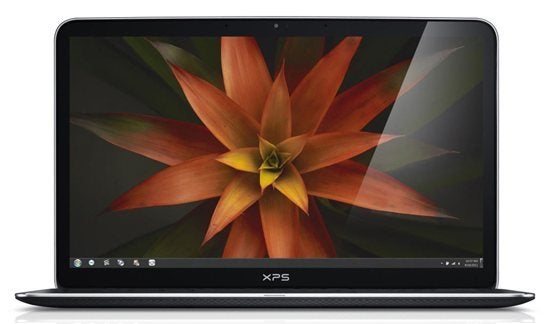
Dell XPS 13Lately I've been changing things up a bit. For several months I used a little Lenovo ThinkPad X220 running Windows 7 and had a great experience -- it felt rock solid and responsive, with fantastic battery life. Then I switched to a MacBook Pro, and now that I've gotten used to it, I actually find it more or less a wash between the two (sorry, Apple fanboys).
So it was with considerable excitement that I decided to take my first Ultrabook, the Dell XPS 13, for a spin. As you know, Ultrabooks are the Wintel world's answer to the MacBook Air. But there are no hard-and-fast specs for what an Ultrabook should be other than thin and light and cool-looking, so each manufacturer has its own interpretation.
[ Get ready for Windows 8 with the Windows 8 Deep Dive PDF special report. | Read the InfoWorld review: Windows 8: Something old, something awkward | Stay abreast of key Microsoft technologies in our Technology: Microsoft newsletter. ]
The Dell XPS 13 came in a classy black box, the kind in which you'd expect to find an expensive modern board game. Not just the Ultrabook, but the whole box containing the power supply and old-fashioned paper manual slipped neatly into my backpack -- nice packaging.

The Inevitable Air-versus-Ultrabook Comparison

Opening the box I was greeted by a striking laptop shell -- aluminum on top and carbon fiber on the bottom -- sufficiently thin and pretty to elicit an "ooh" from several people I showed it to. Inside the XPS 13 clamshell, rather than continuing the aluminum theme, Dell surrounds the keys with a black surface coated with what it aptly terms "soft touch paint."
Predictably, the XPS 13 is not quite as thin as the 13-inch MacBook Air, sloping from 0.71 to 0.24 inch as opposed to the Air's winsome 0.68 to 0.11 inch. But the Dell shares the Air's minimalism, omitting DVD and memory card slots and providing just two USB ports. The XPS 13 also has a noticeably smaller footprint: 12.4 by 8.1 inches as opposed to 12.8 by 8.94 inches. Both laptops weigh just under 3 pounds.
As for the aesthetics -- well, in a beauty contest between Round Rock, Texas, and Cupertino, Calif., I think you know the outcome. But arguably, the coolness delta between the two laptops is small. You also pay for the Apple ego boost -- or the privilege of using OS X, if you prefer: In their default configurations, the XPS 13 costs $999, while the 13-inch Air costs $1,299.
Both come with 128GB solid-state drives, 4GB of dual-channel DDR3 1,333MHz main memory, and Intel Core i5 processors with 3MB of level 3 cache. If you're picking nits, the XPS 13's i5 runs at 1.6GHz, while the 13-inch Air's i5 runs at 1.7GHz. Again, these are default configurations, so you have other options at higher price points.

It's a Windows World

Despite Dell's obvious attempt to imitate the Air, cross-platform comparisons go only so far. From my standpoint, the real benchmark is my fondly remembered Windows 7 machine, the ThinkPad X220, which has an MSRP of $1,529 but can be bought at this particular moment on the Lenovo website for around $900 -- and includes 320GB of spinning disk, a zippy 2.3GHz i5, and a 12.5-inch screen.
The XPS 13 has a slightly larger 13.3-inch widescreen display, with a native resolution of 1366 by 768 pixels, powered by an Intel HD 3000 graphics controller. The image is clear and bright, although the Gorilla Glass surface is too reflective for my taste. As with almost every laptop these days, you'll find a little cam staring at you from the top of the screen. With the default Dell Webcam Central software, the image produced is less sharp and color-accurate than that of FaceTime (the comparison had to be made).
The XPS 13 keyboard successfully imitates the spacing, backlighting, and tactile response of a MacBook keyboard, right down to the similar arrangement of special function keys along the top row, though you get both Backspace and Delete, of course. For what it's worth, I prefer the arrangement, response, and textured feel of the ThinkPad's keys to those of the Dell.
The XPS 13's trackpad is MacBook-like, too. Must we, Dell? A trackpad that doubles as a mouse button and supports gestures makes sense for a MacBook, I guess, but not so much for a Windows 7 laptop. Call me a Philistine, but I want two real buttons.
One surprising note: The XPS 13's audio isn't bad for a laptop. Sound from the speakers bounces from under the unit and from a baffle near the screen hinge, and although I wouldn't say you can actually hear bass notes, the midrange is stronger than usual. Strong stereo separation lends a nice sense of presence.
As for the XPS 13's battery life, Dell says you can get "up to 8 hours and 53 minutes," almost two hours longer than what Apple claims for the Air, but nowhere near what I experienced personally with the ThinkPad X220 (using the nine-cell battery option).
Lastly, I tested Dell's claim that the system would come alive from a cold boot in 8 seconds. It turned out to be more like 15 seconds, but that's still nice and quick.

Ultra Style

How would I rate my first Ultrabook experience? The XPS 13 is a fine, well-made, durable-seeming laptop. I feel uncharacteristically stylish using it. Yet personally, if it were my money, I would opt for a faster processor and a lot more storage -- and I don't care if that means a spinning disk.
UltrabooksYou can argue that Ultrabooks are all about portability, but that's clearly not the case. For example, the ThinkPad X220 may not be as thin as the XPS 13, but it's only a tad heavier and roughly the same depth and width -- though homely by comparison.
Yes, the real story here is style. I only wish that Dell hadn't tried quite so hard to make the XPS13 so similar to the Air. The desperate yearning for the Apple glow is a little embarrassing. Has it ever been hip to buy a knockoff?
Or it may just be that the thin and shiny woo-woo factor is lost on me, but apparently not on a lot of other people. According to Dell, demand for the XPS laptops has exceeded expectations. At this writing, they're back-ordered for about six weeks.
This article, "Dell XPS 13: Gray with MacBook Air envy," was originally published at InfoWorld.com. Follow the latest developments in computer hardware and mobile technology at InfoWorld.com. For the latest business technology news, follow InfoWorld.com on Twitter.
Read more about mobile technology in InfoWorld's Mobile Technology Channel. 

For More Details, Click Hare 

'Breakthrough Product' - Apple Saving Liquidmetal

One of the inventors of Liquidmetal, Atakan Peker, has said that Apple is "unlikely" to use the alloy in its next MacBook range, but he does expect the company to use the technology in a 'breakthrough product'.
Rumors of the use of Liquidmetal in Apple products have been gaining momentum in the past month, with reports that Apple would be using the technology in the next-generation iPhone and MacBook Pro.
Liquidmetal in SIM ejector tool."Given the size of MacBook and scale of Apple products, I think it's unlikely that Liquidmetal casing will be used in MacBooks in the near term," said Peker in an interview with Business Insider. "A MacBook casing, such as a unibody, will take two to four more years to implement."
Peker added that rumors that Liquidmetal would be used in the next MacBooks might not be completely untrue, but it would be on a much smaller scale: "It's more likely in the form of a small components such as a hinge or bracket." Apple has used Liquidmetal in its products already, but just in the SIM card ejector pin, rather than in the body of the iPhone itself.

Still New Technology

One of the reasons behind Peker's belief that it will be a few more years before we see Liquidmetal as a main feature in Apple products is because it is still a new technology that is in the process of being developed. "I estimate that Apple will likely spend on the order of $300 million to $500 million -- and three to five years -- to mature the technology before it can be used in a large scale," he said.
Peker thinks that Liquidmetal will be used to replace current materials used in Apple's devices, and also believes that it will be used to make a breakthrough product. "Apple's exclusively licensing a new material technology (specifically for casing and enclosures) is a first in the industry," he said. "Therefore, I expect Apple to use this technology in a breakthrough product. Such product will likely bring an innovative user interface and industrial design together, and will also be very difficult to copy or duplicate with other material technologies."
Apple has exclusively licensed Liquidmetal's technology, but Peker expects that other companies will find a way to use the technology when it becomes more mature.
Peker explained what benefits Liquidmetal could bring to Apple's devices: "Liquidmetal is super strong, scratch and corrosion resistant, resilient and can be precision cast into complex shapes. The benefits will be in the form of strong and aesthetic structural components, such as casing and frames."
"At first look, it looks like a typical metal, more like stainless steel," Peker explained. "Its silvery grey metallic colour has a bit different tone and hue than stainless steel. Depending on the specific alloy formulation, its hue may vary slightly. Its surface can be prepared in various cosmetic finishes, such as bright shiny, satin or brush metallic. It feels like a solid strong metal like stainless steel and comes a bit warmer to hand when touching compared to other metals."

For More Details, Click Hare 

Friday, April 13, 2012

Mac Detected New "Malware"

The number of Macs infected with the Flashback malware has plummeted in the last few days, antivirus vendor Symantec said today. 


As of Wednesday, Symantec estimated that approximately 270,000 Macs were infected with Flashback, down from a peak of more than 600,000 systems on April 6. (See also "Flashback Trojan FAQ.")
Liam O Murchu, the manager of operations with Symantec's security response team, attributed the decline to the "sinkholing" operations conducted by it and other security firms, and to the widespread news of the malware's reach.
"I think what's probably contributing to the decrease in numbers is the awareness of the malware," said O Murchu, referring to the scores of news stories and blog posts that have run since April 4, when a Russian security company announced Flashback had infected more than half a million Macs.
Even so, O Murchu said Symantec had no definitive proof of why the botnet was shrinking, only suspicions.
Symantec tracked the decline of the Flashback botnet -- from 600,000 Macs last week to 380,000 as of Tuesday to 270,000 yesterday -- by using the same intelligence-gathering tactic as the one deployed by two Russian security companies who came up with separate estimates of the Flashback infection.
Flashback includes a domain-generation algorithm that tells the malware where to look for commands each day, a common technique by bot makers. Symantec cracked the algorithm to determine those domains -- they're essentially a jumble of letters -- and registered a week's worth of them. It then set up its own servers on the domains and waited for infected Macs to reach them for orders. Sinkholing also prevents any newly-infected Macs from communicating with the hackers' command-and-control servers, stymying the installation of additional attack code on the machines.
The process, called sinkholing, was also used by Dr. Web and Kaspersky Lab, the two Russian antivirus firms that last week put a number on the size of the Flashback botnet.

"It prevents new infections," asserted O Murchu.
The criminals responsible for Flashback have also stopped serving malicious content from a number of domains they registered late last month and in early April, Symantec reported.
Kaspersky's sinkhole also reported a drop in the number of Flashback-infected systems connecting to its servers. Earlier this week, Kaspersky said the botnet had gone into free fall, dropping from a high of 650,000 on Friday, April 6 to 237,000 on Sunday.
Other botnets have been suppressed using the sinkholing tactic, most recently last month when four security companies and organizations crippled the resurgent Kelihos botnet.
O Murchu was open to a coordinated effort to do the same with the Flashback botnet, even though that wasn't Symantec's original purpose for grabbing the communication domains.
"That's definitely a possibility, if it was done in a coordinated way," O Murchu said.
Flashback can be removed with one of several tools now available on the Internet, including scrubbing utilities created by Kaspersky and F-Secure. Apple this week also promised it would release its own detect-delete tool, but has not disclosed a delivery date. 

For More Info: Click Hare