Recent Posts

Showing posts with label Technology. Show all posts

Thursday, August 23, 2012

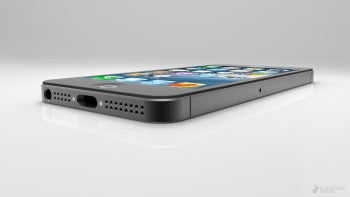
New iPhone Expected to Hit Store on Sept. 21!!!

New iPhone Expected to Hit Store Shelves on Sept. 21Apple fans anxious to know when the next iPhone is coming out may want to circle Sept. 21 on their calendar. That is the date when Verizon Wireless employees will begin a vacation blackout, lasting through Sept. 30, a “trusted Verizon employee” told TechCrunch. Earlier rumors have said that Apple will announce its next iPhone on Sept. 12, and release the new handset roughly a week later.
If the reports are true, Apple will follow a pattern similar to last year, when it announced the phone mid-week, and released it on Friday of the following week. Apple also put up the iPhone 4S for online pre-orders a week before launch last year, so we may see a similar timeline for 2012's new iPhone.
Although a September launch for the next iPhone would come less than a year after 2011's iPhone 4S, Apple is already feeling the effects of not having a new handset on store shelves. Last quarter, the company missed analyst estimates, and partly blamed anticipation for the next model. (Even so, iPhone sales grew 28 percent year-over-year.)

What's in the Next iPhone?

New iPhone Expected to Hit Store Shelves on Sept. 21
As usual, Apple isn't talking about the new iPhone yet, but numerous reports have claimed that it'll have a 4-inch display, instead of the 3.5-inch screen found on every iPhone to date. It may also support 4G LTE networks for faster data speeds, and sport a smaller dock connector that could cause some accessory headaches. Near-field communications may debut in the next iPhone, allowing tap-to-pay features at retailers, but this rumor seems less likely than the others.
The next iPhone will also run iOS 6, the latest version of Apple's mobile operating system. New features in iOS6 include turn-by-turn navigation, photo and video attachments in the Mail app, a do-not-disturb mode for Notifications and an app calleld Passbook that stores coupons and tickets in digital form. Of course, iOS 6 will also be available for the previous three generations of iPhones, though the iPhone 4 and iPhone 3GS won't support the full range of features.
Some retailers have slashed prices on existing iPhone models, but at this point most potential iPhone buyers should wait just a little longer for the new model.

Monday, July 23, 2012

Google's Nexus 7 Disappears from Play Store!!! :P

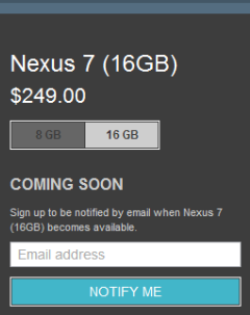
Google’s $250 16GB Nexus 7 tablet disappeared from Google’s online Play store over the weekend due to overwhelming demand, according to an online report. A message on Google Play advises tablet shoppers to sign up for e-mail alerts to learn when the tablet is back in stock. 
Google has not said why the 16GB Nexus 7 is no longer for sale, but anonymous sources “close to Google” told the Guardian that the search giant “seriously underestimated” demand.
Google appears to have been dealing with limited supplies of 16GB Nexus 7 devices for some time. The company recently answered concerns about when customers will get their new Google tablets by publishing a rough timetable for delivery.  All 16GB devices ordered through the end of July 11 were supposed ship by July 20, and Google says remaining orders will be shipped by Friday, July 27. 
Recently, stocks of the Nexus 7 were also proving difficult to find on local retail shelves.  GameStop quit taking orders for the Nexus 7 shortly after the tablet started shipping in mid-July, and around the same time Staples announced it was sold out. Staples now lists the Nexus 7 as available in-store only and on special order, and GameStop lists the Nexus 7 16GB tablet as back-ordered.
As usual with any hot new tech item, eBay sellers are offering Nexus 7 devices at a premium for those unwilling to wait for more devices to ship.
While demand for the Nexus 7 is good news for Google, we're also hearing reports of display issues including backlight bleeding, touch responsiveness problems, and defective manufacturing. The Nexus 7 isn’t the first popular tech device to have production quality issues. When the iPhone 4 first debuted, some early customers reported yellow discoloration on the smartphone’s display that was later linked to residue from the manufacturing process. Similarly, some early buyers of the iPad 2 complained of backlight bleeding.
The $200 8GB Nexus 7 is available only through Google Play and is currently shipping within three to five days.

Thursday, June 28, 2012

Google Nexus 7 Can Heavily Impact Tablet Wars!!

Complete Coverage
Best current price: $199
With Wednesday's launch of its Nexus 7 tablet, Google gives the current tablet market a much-needed jolt of energy.
The Nexus 7 is the tablet that Google should have launched with a year ago. The Nexus 7 packs a high-performance, no-compromise set of features at attractive prices--$199 for the 8GB model and $249 for the 16GB model.

This winning--on paper--combo will immediately put the Nexus at center stage. It also will make all current Android tablet makers reevaluate their own offerings on the market. But selling a tablet directly to consumers online, with no clear changes to the app ecosystem behind it, won't be enough for Google to gain market share at Apple's expense.
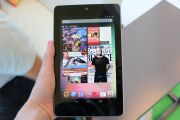
Google Nexus 7Google Nexus 7Manufactured by Asus, the Nexus 7 tablet represents the first commercial manifestation of Nvidia's Project Kai. Nvidia designed the Kai reference platform to provide manufacturers with a shortcut blueprint of how to create a competitive tablet at consumer-friendly pricing.
At CES 2012, when Nvidia and Asus announced plans to produce a Tegra 3 tablet for $250, the two companies clearly had the Amazon Kindle Fire in their sights.
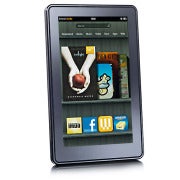
Amazon Kindle FireAmazon Kindle FireThe Kindle Fire, which shipped last fall, is the best-selling Android tablet thanks in large part to its low price of $199. But the Kindle Fire takes a lot of heat for its mediocre 1024-by-600-pixel display, its forked Android operating system, its limited specs (no camera, little onboard storage, no expansion), and its slow performance. Sales numbers for the Kindle Fire have dropped off since the initial burst of enthusiasm from consumers; but no other Android tablet has made a significant impact, either.

Google Takes Charge of Its Own Tablet--Sort Of

Google's move into the tablet arena with its own branded Nexus tablet is significant for several reasons. First, it shows that the company recognizes how important it is for an OS maker to be deeply involved in creating hardware that complements its own software.
For evidence, look no further than the mess of compromises and mediocrity we've seen from Android tablets over the past year, including poor choices in weight, processors, display, and design.
In today's Apple-dominated, post-PC age, a tablet with hardware designed independently of its operating system is unlikely to emerge as an impressive flagship device. And certainly that approach isn't the way to generate the Apple-level frenzy that every tablet maker yearns for.
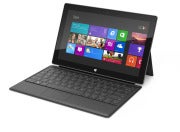
Microsoft Surface tabletThat's why Microsoft jumped into the PC hardware fray for the first time in 37 years, with last week's introduction of the Microsoft Surface tablet.
Microsoft Surface tablet[Read: "Microsoft Hardware: Successes and Failures"]
And it's why Google is expanding on what it already offers with its Nexus phone line by now offering its own tablet. The company should have taken this step last year when it launched Android 3.0 Honeycomb, the first operating system designed specifically for tablets, instead of crossing its fingers and hoping for the best with the spectacularly unimpressive Motorola Xoom tablet.
To what extent the Nexus 7 embodies Google's vision of a tablet is unclear. One area where Google may have influenced its design is in the tablet's inclusion of near-field communication capability. But beyond that, the core specs for the Nexus 7 are the ones that Nvidia and Asus talked about as far back as CES.
Back then, Asus went so far as to introduce the Asus Eee Pad MeMo 370T with specs, price, and a time frame for availability that are quite similar to the Nexus 7's. Since CES, however, Asus has said nothing more about its MeMo plans. Now we know why.
Clearly, all parties recognized that for the Android tablet OS to succeed, something had to change. And the reality of Kai should have a significant impact on current tablet makers.
How can Toshiba's Excite 7.7 tablet, priced at $550 and carrying a 1280-by-800-pixel display, compete with Google's Nexus 7 when the latter offers the same screen resolution and costs $300 less? The Toshiba does have a 0.7-inch larger screen, but both have 16GB of memory and both run on an Nvidia Tegra 3 processor.
Meanwhile, Amazon is rumored to be prepping its coming Kindle Fire replacement for a midsummer launch. Whether Amazon will step up its game with that tablet remains to be seen; but based on today's news, we believe that the company will need to have a competitive answer to remain firmly in the mix.
Here's a chart that compares the specs of the Google Nexus 7 to five other tablets:

The Missing Elements

So far, Google hasn't indicated that it will sell the tablet anywhere except at its Google Play online store. Consequently, consumers who want to do their own hands-on comparison of the Nexus 7 with other tablets will be out of luck.
Google's approach with the Nexus 7 addresses a relatively small subset of the problems facing the Android tablet market. Among the other issues to be resolved in the bigger picture are better-resolution displays and improved, lighter designs.
Google Android 4.1 (Jelly Bean)Perhaps most significantly, Google's conference has as yet lacked any discussion of the OS- and device-fragmentation issues that plague developers. I routinely hear these issues cited as the number-one reason that developers choose to make an iPad app instead of an Android app; and the tiny market share that Android tablets have thus far achieved has done nothing to convince developers to fully embrace the Android tablet ecosystem.
Google played up the fact that the company now lists some 600,000 apps in the Play store; but it didn't say how many of those apps are optimized for and work well on a tablet.
Google Android 4.1 (Jelly Bean)The app ecosystem, unfortunately, still remains a sticking point for Android tablets--and a key factor that makes it harder to recommend an Android tablet to consumers eager for the next great, cool app.
The bottom line is Android still has a long way to go to surpass Apple's iPad. But when we look back, the delivery of the Nexus 7, with Android 4.1 Jelly Bean, may mark a turning point in the Great Tablet Wars.

Tuesday, June 26, 2012

Smartphones and Laptops: New Ways to Pair Them!!

Smartphones and Laptops: New Ways to Pair ThemEach new gadget brings speculation about what older device it will replace--full-featured laptops supplant desktops, while ever-smarter phones relieve you from carrying a laptop on occasion. But don't overlook the partnerships that can result. Soon, for instance, you’ll be able to use an Ultrabook to charge your phone wirelessly, or you'll be able to transfer files by tapping your smartphone to a laptop lid.
Today, most people connect their smartphones and laptops only occasionally--for transferring a photo, say, or by tethering the phone for Internet access on the laptop. We tend to use these two mobile devices separately, because we've never had a perfect, seamless way to keep the devices connected and in sync. With rapidly developing mobile technologies, though, we’re getting closer. Here’s a look at the burgeoning simpatico relationship between smartphones and laptops.

Apps for Continual Connectivity and PC Control

Smartphones and Laptops: New Ways to Pair Them

Intel's Pair & Share sends images from a mobile device to a PC or TV.
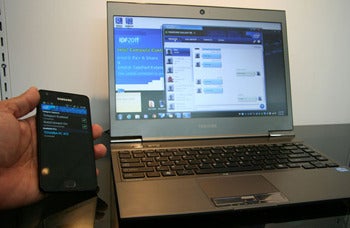
Intel announced last year apps that make connecting smartphones and Windows PCs easier. For example, the Pair & Share app quickly sends photos from your Android phone, iPhone, or tablet to your computer screen or TV, and the TelePort Extender app puts the phone’s texting and caller information on the computer.
The free apps are available for download now, but Intel promises even more interaction between mobile devices and laptops--particularly with the new class of Ultrabook laptops.
Smartphones and Laptops: New Ways to Pair Them

TelePort Extender shows phone information on a PC screen.
As part of its mission to position Ultrabooks as "the pinnacle of mobile computing devices," the chip maker is working with PC manufacturers to add innovative technologies to the laptops. Aside from touch interfaces and voice and gesture recognition, Intel’s plans include more applications for “using smartphones to interact with and control an Ultrabook or desktop PC,” according to a recent Intel statement.
This means that in addition to transferring data, smartphones will be able to manipulate your laptop--remotely controlling the PC, perhaps in ways we haven’t seen yet. Instead of needing several desktop-mobile connectivity apps (such as a remote desktop tool, a remote control for presentations, a media controller, contact-syncing utilities, and multimedia-syncing apps), we could have one seamless approach.

Wireless Smartphone Charging

The interaction will go both ways: A laptop may manipulate or control a smartphone, too. Intel demonstrated a wireless phone-charging feature for Ultrabooks at the Computex trade show this year. Inside the Ultrabook is a slim transmitter; on the phone is a receiver. You just place the phone next to the Ultrabook to charge the handset--no need to carry around a phone charger or to remember to pack a USB cable.
TransferJet technology offers similar wireless charging capabilities, plus the ability to transfer data at a fast maximum rate of 560 mbps. Although we haven’t seen many TransferJet devices since Sony developed the technology and showed it off in 2008, inductive charging and cable-free file transfer certainly could become killer features for your laptop and smartphone, especially for frequent travelers.

Tap to Connect

Smartphones and Laptops: New Ways to Pair ThemOther technologies being built into laptops and smartphones allow the devices to share tasks without making physical contact. One expands the near-field communication short-range wireless protocol, now used mostly for mobile payments systems such as Google Wallet’s “tap-and-pay” system. MasterCard, meanwhile, is incorporating its PayPass technology into Ultrabooks so that you can wave your smartphone at your laptop to make online purchases more securely.
NFC may have other handy uses, such as enabling wireless information sharing between devices. With an NFC-enabled phone and laptop, you may be able to send a contact card, website address, videos, or other information from your phone to your PC without needing to install additional apps or wire the devices together. NFC-enabled phones could also allow you to verify your security information on websites or your laptop. In the future, NFC may support quicker Bluetooth pairing between your phone and laptop. The Hewlett-Packard Envy 14 Spectre is one of the first Ultrabooks to have built-in NFC support.

The Future Is Connected

All of our devices are becoming smarter and more connected. In the years to come, using your smartphone and laptop--as well as your TV, tablet, and other connected devices--together will be simpler. Start playing a game on your laptop, and finish it on your phone. Stream anything from your smartphone to your laptop, or vice versa. Seamlessly access all your information on any device. We’ve seen hints and examples of such capabilities already, but that’s just scratching the surface of what’s starting to be possible.

Saturday, June 23, 2012

AMD Radeon HD 7970 GHz Edition !!eXclusive!!

 AMD Radeon HD 7970 GHz Edition 

AMD Radeon HD 7970 GHz Edition Review

AMD shipped its original Radeon HD 7970 in December 2011, and for a brief period, this 4.3-billion-transistor monster held the graphics performance crown. Several months later, Nvidia launched the GTX 680, a power-efficient graphics card that retook the slot as the best single GPU card for gaming.
In some ways, though, the GTX 680 is an odd beast. Nvidia has been reluctant to supply what's called GPU compute performance, and it’s been suggested that Nvidia deemphasized the compute performance in search of gaming performance glory. The latest GTX 680 drivers don’t support OpenCL 1.2 (more on that later), though you can still run Nvidia’s own CUDA framework for GPU compute.
That’s proved a good product strategy, but now we’re starting to see a new generation of games that integrate GPU compute features into the game, either using DirectCompute or OpenCL. We’ll take a look at a couple of these games later. For now, let’s run down the key differences between the original and the new card.
Feature Radeon HD 7970 Radeon 7970 GHz Edition
Graphics Cores 2048 2048
Texture Units 128 128
ROPs 32 32
Base Clock Frequency 925 MHz 1006 MHz
Boost Clock Frequency NA 1050 MHz
Memory (Frequency) 3GB GDDR5 (1376 MHz) 3GB GDDR5 (1500 MHz)
Memory Interface 384-bit 384-bit
Transistor Count 4.3 billion 4.3 billion
Display Connectors 1 x Dual Link DVI, 1 x HDMI 1.4a (Fast), 2 x mini-DisplayPort 1.2 2 x Dual Link DVI, 1 x HDMI 1.4a (Fast), 2 x mini-DisplayPort 1.2
Power Connectors 1 x 8-pin, 1 x 6-pin PCIe 1 x 8-pin, 1 x 6-pin PCIe
Thermal Design Power (TDP) 250W 250W
AMD claims the core clock boost from 925MHz to 1GHz is due to better understanding of the manufacturing process and a few tweaks to that process. The reference card has a sticker on the back labeled “Rev 02”, though that probably refers to the card as a whole. Since a number of AMD partners already ship cards running in excess of 1GHz, officially supporting that clock speed isn’t a surprise.
AMD is also building the new version with faster memory—the same 6GHz effective memory that Nvidia uses on the GTX 680. But perhaps most interesting is the new “boost clock”—something that Nvidia implemented in the GTX 680. AMD tweaked its PowerTune technology, which manages the power envelope of the card, to allow for slightly higher core clock speeds if power demands aren’t too high.


It’s pretty simple: AMD simply added new P-states to PowerTune to allow for higher clock rates for short periods of time, when needed.

The Test System

All our performance and power tests were run on our standard graphics test system:
  • Intel Core i7-3960X @ 3.3GHz
  • Asus P9X79 deluxe motherboard
  • Intel RT2011 sealed liquid CPU cooler
  • 16GB Corsair DDR-1600 memory (quad-channel)
  • Corsair AX1200 power supply
  • 1TB Seagate 7200.12 HDD
  • Asus Blu-ray reader / DVD writer
  • Corsair Graphite 600T case
The system was not overclocked. A Watts Up Pro USB power meter collected the system power data. All the game tests are reported at 2560 x 1600 pixel resolution with 4x multisampling antialiasing enabled.

Power Draw

The architecture hasn’t changed, and the AMD reference card looks nearly identical, right down to the display connectors and fan. However, PowerTune Boost, the higher core clock speed, and the faster memory does come at a cost—while idle power is actually a little better than the original, at 120W (versus 124W for the first Radeon HD 7970), full load power is a whopping 384W, over 18 percent higher than the 324W maximum power draw on the original HD 7970. The GTX is more power-efficient than either card, at 119W idle and 318W under load. Note that the HD 7970 GHz Edition still uses the same power connectors as the first 7970—one 8-pin PCIe power connector and one 6-pin connector. The new AMD progeny is the same 11-inch length as the original; both are a half-inch longer than the GTX 680.
These are power ratings for a system with a 1200W PSU.
What this also means is that the card may be louder, depending on the cooling system design. Certainly the reference GHz Edition card is noisier under full load than the original HD 7970.
Given the right case and cooling system, though, noise can be mitigated somewhat. How does the card peform? We ran through a number of our standard synthetic and game benchmarks, plus a pair of new game tests, which make heavier use of GPU compute.

The 3DMarks

Nvidia’s GTX 680 has an impressive tessellation engine, which is reflected in the 3DMark 2011 score. That’s the one benchmark that demonstrated a significant advantage for the GTX 680. The 3DMark Vantage test uses DirectX 10, so it’s a closer race in that benchmark.

Game Performance

But it is game performance that’s important here, so let’s see how our suite of games runs on the three GPUs. First, we’ll look at the older tests, which aren’t as GPU-compute-heavy.
The original 7970 has a slight edge over the GTX 680 in Crysis 2. The GHz Edition Radeon opens up a bigger lead.
The GTX 680 had a strong lead over the original HD 7970, but the GHz Edition 7970 wins out.
In Metro 2033, the two Radeons have little difference, but the GTX 680 seems to lag in this game test.
The faster memory, wider memory bus, and higher core clocks give the new GHz Edition 7970 a big boost in DiRT 3.
The newer Radeon performs noticeably better than the original, and outpaces the GTX 680 as well. So the higher core clock and faster memory (combined with the 384-bit memory interface) help substantially.
Now let’s turn to a couple of newer game titles that make heavier use of GPU compute. Sniper Elite V2 uses supersampling plus DirectCompute accelerated antialiasing. DirectCompute is also used for high-dynamic-range ambient occlusion shadow effects and depth-of-field calculations. DiRT Showdown is the first game shipped to use global illumination, plus other advanced lighting techniques.
Here, the differences are more dramatic. AMD’s focus on building a GPU that performs well in both graphics and GPU compute seems to have paid off. Note that we didn’t test GPU compute heavily, but it’s worth noting that the latest version of Winzip, Winzip 16.5, offers an option to enable OpenCL GPU acceleration to compress files. It does make a difference—an 8GB folder took about 10 percent less time. However, this option doesn’t appear when a GTX 680 is installed, even with the latest 304.48 beta drivers.
Final Thoughts

Competition is great for consumers. AMD will be shipping the Radeon HD 7970 GHz Edition in the next couple of weeks, at roughly $499—$100 cheaper than the original and in the same price ballpark as the GTX 680. On a purely performance basis, the new Radeon wins out over the GTX 680, albeit with a hefty power hit. However, the GTX 680 is quieter, consumes less power, and is more compact. That may affect your choice. But if you’re looking for the fastest single GPU card available, AMD seems to have retaken the crown.
Microsoft Surface: Wi-Fi Only at Launch

We may have an answer to one of the big questions about Microsoft's Surface. The software maker's tablets will be available only with Wi-Fi at launch, according to an online report. That's bad news for road warriors hoping to pick up a Surface with wireless broadband access for business trips, but maybe the wait for a Surface with built-in 3G or LTE-connected Surface won't be long.
It's unclear what Microsoft's plans are; nevertheless, Bloomberg cites two “people familiar with the matter” who say Surface will "initially go on sale without a connection to mobile-phone networks.” Did you catch that? Surface reportedly won't have 3G or LTE connectivity built in when it initially goes on sale.
That sounds to me like Microsoft may release the ARM-based Windows 8 Surface tablet, dubbed Surface for Windows RT, as a Wi-Fi-only tablet in the fall. Then the more high-powered Intel-based Surface for Windows 8 Pro would follow a few months later with mobile connectivity baked in. That's speculation, but it seems logical.
Surface RTis designed for home users. It will run on an ARM processor, have slower USB 2.0 ports (Surface Pro supports USB 3.0), and 32GB or 64GB of storage. Most people buying this device are looking for the basics: e-mail, Web browsing, online videos, social networking, and some basic desktop programs (Word, Excel, rudimentary photo editing). More often than not, home users don't take their devices beyond their front door. And when they do it's usually to a Starbucks, airport, or college campus where Wi-Fi networks are available.
Adding Wi-Fi connectivity through a MiFi or other mobile hotspot or USB plug-in device is an option for the early Surface user who wants more. It's an added expense, but the Surface user has the choice of using a USB device, unlike with the USB-less iPads.

Surface Pro, on the other hand, will be better equipped for professionals who need a machine they can take to job sites. These users also tend to need Internet access even if a Wi-Fi network isn't present. Important specs for Surface Pro include a faster Intel Core-i processor, larger storage capacity (up to 128GB), USB 3.0, microSDXC reader, and digital pen technology (for graphic artists and others who are into that kind of thing). Surface Pro is the machine you want in order to work, at least based on the specs, and it would be a strong candidate for a mobile connectivity option.
Microsoft hasn't announced any launch dates for Surface other than to say Surface RT will be available during the Windows 8 launch. Surface Pro will be available about three months later. Windows 8 is generally expected around October or November, which would put the Surface Pro release in early 2013.
January or February is safely outside the "initial" sales period for the Surface RT in late 2012. So perhaps the real story shouldn't be "Surface will be Wi-Fi only at launch," but "Surface RT will be Wi-Fi only?" It's a guess, but it's logical.

Wednesday, June 20, 2012

Microsoft New Surface Tablet!!

Microsoft Surface Tablets: 5 QuestionsMicrosoft left a lot of unanswered questions after following Apple into the tablet hardware business Monday with its new Windows 8-based Surface PCs/tablets. The software maker introduced the new family of devices during an event in Los Angeles.
Microsoft said the new Surface tablets are meant as companion hardware for Windows 8--the most dramatic overhaul of the OS since Windows 95. Company CEO Steve Ballmer said: "We wanted to give Windows 8 its own companion hardware innovation." Windows 8 is expected to be available in the fall.
The Surface brand was originally used for a tabletop touchscreen computer Microsoft launched in 2007.

Early Impressions Are Positive

Looking at the spec sheet, the new devices sound promising and early impressions are generally positive. The new tablets will come with a 10.6-inch display, a kickstand for tabletop viewing, and a super-thin keyboard case that attaches to the device with magnets.
Surface will come in two flavors: Surface with Windows RT and Surface Pro with Windows 8 Pro. Windows RT is the version of Windows 8 designed for ARM processors; it includes the new touch-friendly Metro-style interface, as well as a limited version of the traditional Windows desktop for running Internet Explorer and Microsoft Office.
Surface tablets with Windows RT will include a micros slot, USB 2.0, and a Micro HD port. The devices will weigh about 1.5 pounds and be about 0.36-inches thick. Microsoft did not say which processor the Windows RT device would have, but did say the tablets will come with your choice of 32GB or 64GB of storage.
Microsoft Surface tablet with Metro interface
Microsoft Surface tablet with Metro interfaceThe Surface Pro tablets will be Intel-based with access to the Metro UI as well as to the fully functional Windows desktop and will come in 64GB and 128GB versions. The tablet will have a microSDXC card slot, USB 3.0, and Mini Display Port. The Surface Pro will weigh just under two pounds and be about half-an-inch thick.
That's what we do know about Surface, but there are also a few interesting questions left to answer.

How Much Will It Cost?

Microsoft was short on details when it came to pricing the new Surface tablets. The company said the Windows RT version of Surface would cost about the same as comparable slates. Surface Pro, meanwhile, would be priced similar to comparable competitive Ultrabook PCs.
Let's assume that comparable tablets for the Windows RT version mean the market leader, Apple's iPad. So the entry-level Surface models should cost about $600 for the 32GB version and $700 for the 64GB model.
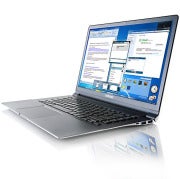
Samsung Series 9How much Surface Pro devices will cost is another issue entirely since Microsoft wants to compete with Ultrabook PCs. When Intel introduced the new class of portable laptops in spring 2011, they were supposed to be priced under $1,000. But that dream is only now becoming a reality with second-generation Ultrabooks.

Samsung Series 9Devices like the Lenovo U310 and 410 are priced at $750 and $800 respectively, Vizio just released a line of Ultrabooks that start at $900, and the base model for Sony's new Vaio T13 costs $800. Will the Surface Pro be priced under $1,000 as well, or will Microsoft reach for a higher cost similar to the Samsung Series 9 ($1,400-$1,500) or the Asus Zenbook Prime UX31A ($1,100)?

When Will It Arrive?

The Windows RT version of Surface is due to come out during the general release of Windows 8, which is expected in the fall, around October. The Surface Pro is scheduled for release about three months later, meaning in early 2013. Microsoft did not offer any specifics beyond these general time lines.

Will Microsoft Ever Give Up on the Digital Pen?

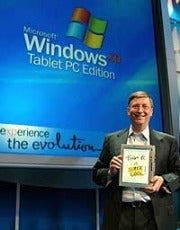
Bill Gates at the 2002 introduction of Windows Tablet PC edition with digital penBill Gates at the 2002 introduction of Windows Tablet PC edition with digital penMicrosoft couldn't resist giving a nod to its legacy tablets (convertible notebooks) by including digital pen functionality with the Surface Pro. But haven't consumers already spoken and said, "Thanks, but no thanks" to digital pen input technology by adopting the finger-driven iPad in droves?

What About 3G/4G Connectivity?

Microsoft didn't say whether the new Surface devices would include mobile data. Perhaps the company didn't want to discuss that issue while it works on developing carrier partnerships for its new tablets. Wi-Fi only devices are great, but many people--especially those looking at the Surface Pro for work--will want the option of a higher-priced device that comes with 3G/4G connectivity.

Will the Surface Fulfill the Promise of Apple's iPad?

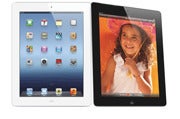
Apple's latest iPad tabletWhen technology critics speculate about the future of the iPad, many wonder if it could one day replace the home PC for many users. In some ways it has already done that for users who just want a computer that can do casual Web browsing, e-mail, social networking, and video streaming. There are also some professionals using the iPad instead of a laptop at work, including programmers, journalists, and small business owners.
Apple's latest iPad tabletBut while the iPad is becoming a popular choice for the road, many people are still holding on to their laptops. That could change with Surface and similar devices since they offer a familiarity the iPad doesn't necessarily have.
This is especially true with the Surface Pro: It's a full Windows PC that is still a relatively sleek tablet with a slim travel keyboard designed with touch typists in mind. That means you can take all the programs you use right now and stick them on something the size of a tablet. Even the entry-level version of Surface running Windows RT offers the more familiar desktop interface (albeit with limited functionality) for people who want a basic desktop.

Something Missing

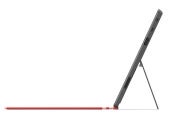
Microsoft Surface in profileMicrosoft Surface in profileBased on what Microsoft has said, however, the one thing Surface may be missing is the consumer-friendly entry-level price point of $500. That appears to be the magic number for people to buy iPads, and tablets that have been initially priced above that have failed to gain much traction: i.e., RIM's BlackBerry PlayBook and the HTC Jetstream.
Perhaps Microsoft will still meet the $500 price with the 32GB version as does the Asus Eee Pad Transformer Prime TF201, but we won't know for sure until Windows RT Surface tablets hit store shelves.
Microsoft is off to a good start with Surface, but we'll have to wait a few months yet to find out if the company's promises will meet consumer expectations.

Sunday, June 17, 2012

Microsoft Tablets: 5 Things You Want to See!!

The buzz around Windows tablets is at fever pitch now, on the eve of Microsoft’s mystery announcement in Los Angeles on Monday.
The rumor mill favors some big news regarding Microsoft’s Windows 8 tablets, but the Los Angeles location would seem to indicate that Microsoft may have an entertainment angle in play, as well, perhaps a content store that will challenge Apple’s iTunes, Google’s Play, and Amazon’s services on its Kindle Fire Android tablet.
Several analysts theorized that, as an entertainment capital, L.A. could offer the backdrop for media content on any new tablet, including games, movies, or more.
Rob Enderle, an analyst at Enderle Group told our sister publication Computerworld that Monday's announcement could be an Xbox-like tablet subsidized with games that users would buy. "Xbox does do announcements in L.A., and they did just announce Xbox SmartGlass at the E3," Enderle said.
Or, he added, the news could be merely a speculative product "designed to get the industry excited" with a focus on the tablet as a content-consumption device. "Content is where I think Microsoft is focused."
Another possibility: That Microsoft may be getting into the hardware business itself, manufacturing its own tablet.
Whichever path Microsoft announces Monday, one thing is for certain. Windows 8 tablets are coming, and they’re coming soon. The question is, what will they bring to the party that other comers haven’t? And will these tablets be able to mount a credible challenge to Apple’s iPad, or the mounds of Android 4.0 tablets?
Here are five things that Microsoft and Windows 8 tablets need to have to make an impact.

Easy Content Acquisition

Apple and Amazon have excelled in making it dead simple for consumers to shop for their music, videos, and TV shows. Apple makes downloading content for local use as easy as it gets via iTunes, while Amazon makes it easy to download and stream from its cloud services (the Kindle Fire’s limited local storage makes it less viable to store your media locally).
Google’s Play store lets you shop for music, but it remains a bit awkward. And movies are still merely rentals, not buy-to-own. No TV shows in sight.
Microsoft tablets have a huge opportunity to take a lead here, if the company can master the shopping experience and cover its bases across music, movies, and television.

Competitive Pricing

Even though we’ve heard the first tablets announced in early June at Computex, we haven’t seen anything firm about pricing. Microsoft tablets will need to come in at a price that’s, at the least, competitive with its Apple and Android competition. And ideally, at a price that undercuts the competition--just enough so that consumers take notice, and are enticed to consider something new.
Hitting this kind of pricing may be difficult, however, if reports that Microsoft’s charging manufacturers around $80 to $90 for the OEM version of Windows RT prove true. (Windows RT is the version of Windows 8 that’s designed for use on system-on-chip ARM processor-based tablets. These tablets are the ones that will most directly compete with Apple’s iPad and the variety of Android tablets.)

Better-Than-The-Rest Specs

Microsoft tablets will be, arguably, more than just fashionably late to the tablet party. As such, tablet makers need to eschew last year’s specs, and go straight to something that will get shoppers’ attention. And like it or not, specs do get attention.
Things like a minimum of 32GB of built-in storage, and a high pixel-density display (at minimum, a resolution of 1920 pixels by 1200 pixels, which is less than iPad’s 2048-pixel-by-1536-pixel resolution but superior to the existing baseline resolution of 1200 pixels by 800 pixels on a 10.1-inch display) feel de riguer.
And upping memory wouldn’t be a bad move, either; current tablets are locked at 1GB of memory, but 2GB could go a long way to smoothing the playback experience while using the tablet for other tasks, too.

True Multitasking

Today, you’re still somewhat limited in what you can share among apps in the Apple iOS and Google Android worlds. Often, the limitation is as much due to the app itself as it is the OS.
I, for one, crave a multitasking experience that works as smoothly as it now does on my laptop or desktop--and that’s something that, in theory, Microsoft Windows 8-based tablets and the apps written for Windows 8 Metro will bring to the table.

Sharing of Apps and App Data Across the Tablet and Laptop/Desktop

There are lots of cool apps created for iOS or Android, but the reality is those apps are locked into whatever mobile OS they were written for. The interoperability promise of Windows 8 is huge: Buy your app once, and use it on tablet, on laptop, on desktop.
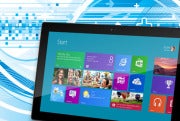
Windows 8 Metro interfaceWindows 8 Metro interfaceThat’s the promise of how Microsoft has billed its Metro interface, but we haven’t seen it in action. Yet.
The above is, in part, a pie-in-the-sky wish list. The multitasking and app sharing could pan out, as could the content ecosystem. But I’m concerned about where Windows tablets will fall in price and specs.
I do believe that Windows 8 tablets will face an uphill battle challenging on price, especially without subsidization (and I don’t mean false subsidies through carriers) or Microsoft offering a concession on how much it charges OEMs for the Windows RT operating system.
Jack Gold, an analyst at J. Gold Associates, theorized to Computerworld that, if Microsoft does announce a Windows RT machine, it will probably cost $600 to $800, the price tag most observers expect other RT tablets to carry, "unless Microsoft plans to take a loss on each device sold because they have to buy the same components as everyone else."
Gold said Microsoft would not ultimately be able to compete with Amazon on price since costs would be higher for an RT machine and because there is no clear pathway for Microsoft to recoup subsidies it might pay to attract consumers.
There's also a possibility that Microsoft may show off a reference platform on Monday as an example of what the Windows RT machine could do, Gold said. That would be the design that other manufacturers, like Asus, Lenovo, Acer and others, would implement.
However, Gold thinks that Microsoft would not want to compete with its own vendor ecosystem. "That makes about as much sense as Microsoft building PCs to compete with HP, Dell, and others," he said.

Redmond Still Thinking Inside the Box?

Finally, as for the specs, I think what we’ve seen so far indicates that PC makers are treating Windows tablets as they would other categories, and they’re not thinking outside of the traditional PC box.
This is the same kind of product planning reasoning that explains why it was Apple, and not a PC maker, who introduced the first laptop with a Retina display. And that kind of thinking could keep Windows 8 tablets from achieving their full potential.

Tuesday, June 12, 2012

Apple iOS 6 vs. Android vs. Windows Phone Comparison!!

Apple's World Wide Developer Conference (WWDC) kicked off today with the unveiling of iOS 6 for the iPhone and iPad. Apple is promising over 200 new features in the latest version of its mobile operating system, but only a few of them were highlighted in the keynote.

                                      
Download Sexy Girls Wallpapers, Click Hare

June is an exciting month for smartphone fanatics as Microsoft is expected to unveil the next generation of Windows Phone at an event next Wednesday, June 20 while Google is expected to reveal its plans for the next version of Android, codenamed "Jellybean."
While some of the features Apple announced today already exist on competing platforms, Apple is putting its own twist on these updates. For example, Siri, Apple's voice-activated virtual assistant, is even smarter now with support for sports, movies, and restaurants. Siri can also directly launch apps, but you still can't control these third-party apps with your voice.
Apple is also breaking up with Google Maps and launching its own Maps application with iOS 6. It includes local business information, Yelp integration, real-time traffic updates, and turn-by-turn navigation. Naturally, Apple has also added Siri integration to maps so you can ask questions along your journey such as, "Are we there yet?" or "Where's the next gas station?" Apple has also added a 3D/fly-over mode to its Maps application, which shows you detailed 3D models of buildings and landmarks.
 
 
These updates certainly give Microsoft and Android something to chew on. While both competing platforms offer voice-command support, those features are crude in comparison to Siri's artificial intelligence and natural dictation. Microsoft's Bing Maps could definitely use a revamp in the next version of Windows Phone as its turn-by-turn directions feature is quite clunky (you must tap your phone at each turn).
We'll be revisiting this comparison later this month as Microsoft and Google roll out new versions of their respective mobile platforms.

Wednesday, June 6, 2012

Smartphones 2012: The Best Are Coming With iPhone 5!!

So Many Phones, So Little Time 

 In the market for a new smartphone? Consider waiting for a few weeks or even a few months before buying. Plenty of interesting phones are available now, but even more are coming--and soon--from the likes of HTC, Motorola, Samsung, and Sony.

We've rounded up the latest announcements and rumors so that you can decide whether to take the plunge now or to delay your purchase in anticipation of a new phone that will be perfect for you.

 
 HTC Droid Incredible 4G LTE 
Carrier: Verizon Wireless
Launch date: June or July 2012
Why you'll want it: Verizon Wireless recently announced the HTC Droid Incredible 4G LTE. If you can get past its mouthful of a name, you'll find that this follow-up to the popular Droid Incredible 2 is a worthy successor.
It features a slim and sleek design, an 8-megapixel camera, high-quality audio and video, and support for Verizon's speedy 4G network. And since the carrier plans to launch this phone "in the coming weeks," this is one device you can get your paws on soon.


Samsung Galaxy S III 

Carriers: AT&T, Sprint, T-Mobile, U.S. Cellular, Verizon
Launch date: June or July 2012--check with your carrier for date
Why you'll want it: The Samsung Galaxy S III has already launched in Europe, where it's earning rave reviews for its spacious 4.8-inch screen, 1GB of memory, 8-megapixel camera, and quad-core processor. If you just can't wait until late June or early July, you can snap up an unlocked version of the Galaxy S III for $800 on Amazon, as of June 1.


Nokia 808 PureView 

Carrier: Unlocked
Launch date: Summer 2012
Why you'll want it: Nokia's 808 PureView has a 41-megapixel camera whose image quality some sources have compared to that of digital SLRs.
Other 808 PureView features include a 4-inch touchscreen and 3G support. Nokia has confirmed that it plans to launch an unlocked version of this phone in the United States this summer or fall.


Samsung Galaxy Appeal 

Carrier: AT&T
Launch date: June 5, 2012
Why you'll want it: Opting for a no-contract, prepaid phone can save you big bucks on your monthly bill. And you don't have to settle for a plain-Jane flip phone to take advantage of these prepaid plans.
The Samsung Galaxy Appeal is a case in point. This Android-based, slider-style smartphone's specs are adequate though not flashy: a 3-megapixel camera, Android 2.3, and a 3.2-inch screen). But what you sacrifice in specs, you get back in pocket change, since you can use the Appeal with AT&T's affordable GoPhone voice and data plans.

Apple iPhone 5 


Carriers: AT&T, Sprint, Verizon Wireless, ???

Launch date: To be determined

Why you'll want it: Apple says that it will "double down" on secrecy with regard to upcoming products, but the company can't stop the iPhone 5 rumor mill. Since last year's launch of the iPhone 4S (and even before that product was announced), iOS enthusiasts have been awaiting the iPhone 5.
Will it include 4G support? Will it have a redesigned case? Will it come with a Liquidmetal design? Will it launch in September or October? Who knows? We sure don't. But we do know that plenty of folks will be lining up to buy one, whenever it reaches stores.